

Deine innere Stimme ist dein bester Coach oder dein schlimmster Feind auf dem Pickleball‑Platz. Selbstcoaching trennt Spieler, die nach Fehlern in die Spirale geraten, von denen, die resetten und weiterkämpfen. So entwickelst du diese Fähigkeit.
Warum Selbstcoaching im Pickleball wichtig ist
Jeder Punkt im Pickleball ist ein Rätsel. Du hast einen neuen Aufschlag, einen kniffligen Dink oder einen Partner, der mit seinem third shot drop kämpft. Dein Geist arbeitet sofort, versucht das Problem vor dir zu lösen. Aber hier ist das, was die meisten Spieler übersehen.
Das wichtigste Rätsel, das du löst, ist nicht das auf dem Platz. Es ist das in deinem Kopf.
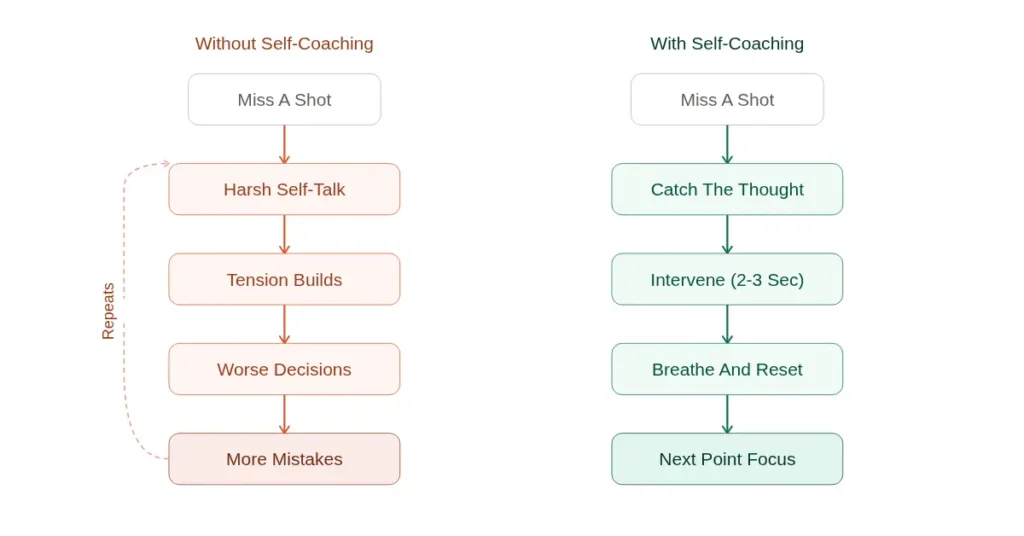
Wenn es hart wird, hast du zwei Optionen: Du lässt die Frustration die Oberhand gewinnen – das führt meist zu verspannten Muskeln und schlechten Entscheidungen. Oder du coachst dich selbst mit dem gleichen konstruktiven Ton, den du für einen Teamkollegen verwenden würdest. So funktioniert Selbstcoaching wirklich.
Es geht nicht darum, deine Fehler zu ignorieren. Es geht darum, sie so anzugehen, dass du dich verbesserst, statt dich zu entmutigen.
Wie du im Spiel mit dir selbst sprichst, wirkt sich sofort auf deine Leistung aus. Harte Worte erzeugen Spannung. Spannung erstickt weiche Hände und deine Bewegungsfreiheit. Eine ruhige, fokussierte innere Stimme hält dich locker und anpassungsfähig. Spieler, die starke Dinking-Technik wissen, dass weiche Hände einen ruhigen Geist benötigen. Das gleiche Prinzip gilt für jeden Schlag, den du machst.
Stell es dir so vor: Beim Spielen hast du bereits einen Coach im Kopf. Die Frage ist nur, ob er dir hilft oder schadet. Zu lernen, dein eigener positiver Coach zu sein, ist eine Fähigkeit. Und wie jede Fähigkeit im Pickleball erfordert sie Übung. Die Sprache, die du nutzt, zählt. Der Ton, den du anschlägst, zählt. Der erste Schritt ist, zu erkennen, dass du die Macht hast, beides zu ändern.
Empathie und Mitgefühl
Du kannst dich selbst so coachen, dass du dich stärkst statt dich zu entmutigen. Der Schlüssel liegt in zwei einfachen Prinzipien: Empathie und Mitgefühl.
Empathie bedeutet, deine Gefühle im Moment zu verstehen. Du weißt, dass du frustriert bist. Du weißt, dass du müde bist. Du weißt, dass du dein Bestes gibst, selbst wenn die Ergebnisse ausbleiben.
Mitgefühl ist der nächste Schritt: Du handelst, um dir selbst zu helfen, wie du einem Freund in Not helfen würdest.
CJ Johnson stellt eine Frage, die direkt ins Herz trifft. Er fragt: Wenn ich zu dir so spreche, wie du zu dir selbst sprichst, wären wir dann noch Freunde? Das ist ein Reality‑Check. Würdest du einen Freund ertragen, der dich nach jedem Fehlversuch als Idiot bezeichnet? Würdest du bei jemandem bleiben, der dir sagt, du würdest immer in entscheidenden Momenten versagen? Natürlich nicht.
Warum akzeptierst du das von dir selbst? Du kannst deiner inneren Stimme nicht entkommen. Sie ist immer da, direkt neben dir. Eine bessere Beziehung zu dir selbst muss von innen kommen. Es gibt keinen anderen Weg. Behandle dich wie jemanden, den du wirklich schätzt. Denn du bist es. Und du verdienst dieselbe Freundlichkeit, die du anderen so großzügig gibst.
Die harsche Stimme einfangen
Der erste Schritt ist, dich beim Handeln zu erwischen. Du verpasst einen leichten Schlag an der kitchen line, und der Gedanke schießt durch dein Gehirn, bevor du sogar deine Füße neu positionierst. Du bist ein Idiot. Wie hast du das verpasst?
Vielleicht sind die Worte leiser. Vielleicht sind sie nur ein Gefühl von Ekel. Aber das Muster ist dasselbe. Du würdest diese Sprache von einem echten Trainer, der neben dir auf dem Platz steht, niemals akzeptieren.
Wenn ein Trainer zu dir käme und das sagen würde, würdest du weglaufen. Du würdest einen neuen Trainer finden. Warum akzeptierst du das also von dir selbst?
Im Moment, wenn du diese Stimme hörst, halte inne. Stell dir eine einfache Frage: Würde ich das zulassen, wenn jemand anderes es zu mir sagt? Wenn die Antwort nein ist, hast du das Problem erkannt. Du bist ein harter Trainer.
Diese Erkenntnis ist der ganze Kampf. Du kannst das, was du nicht bemerkst, nicht ändern. Also fang an, aufmerksam zu sein. Der negative Gedanke ist kein Befehl, dem du folgen musst. Er ist nur ein Signal. Eine rote Flagge in deinem Kopf, die dir sagt, dass dein innerer Dialog aus der Bahn geraten ist.
Vier Interventionsstile
Wenn du diese harsche innere Stimme erkennst, brauchst du eine Möglichkeit zu intervenieren. Du brauchst ein konkretes Werkzeug, um die Spirale zu stoppen, bevor sie die Kontrolle übernimmt.
Martin Gutierrez lehrt vier verschiedene Ansätze – ein Werkzeugkasten. Jeder wirkt anders; die beste Wahl hängt von deiner Persönlichkeit und der Intensität des negativen Gedankens ab.
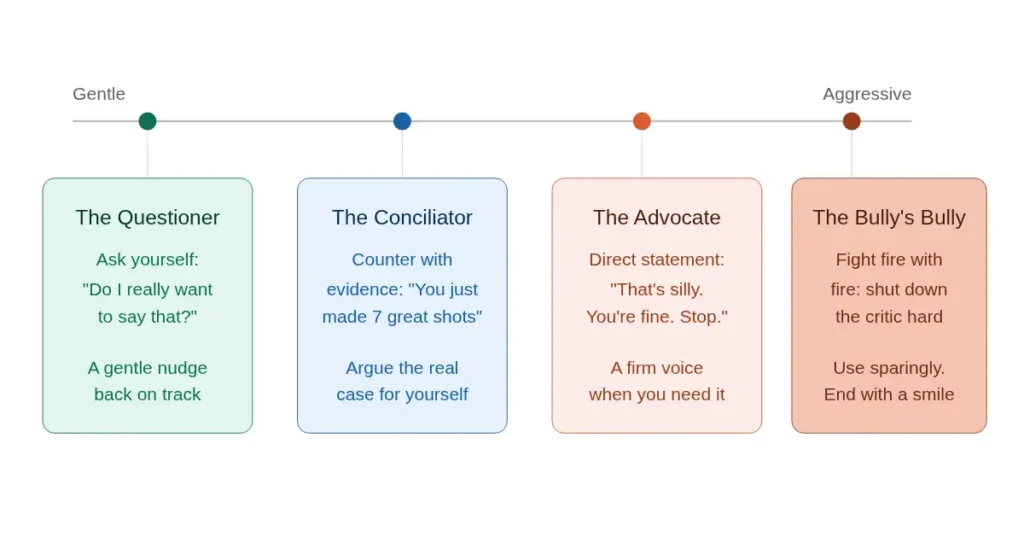
Der leichteste Ansatz ist der Fragesteller. Frage dich einfach: Will ich das wirklich sagen? Es ist, als würdest du dich zu besserem Denken schubsen. Wenn die Antwort nein ist, bist du fertig. Das reicht oft, um den Bann zu brechen.
Als Nächstes kommt der Vermittler. Diese Methode braucht ein wenig Diskussion. Du verfehlst einen Schlag und denkst, du bist schlecht. Dein innerer Vermittler kontert mit Fakten. Wirklich? Du hast gerade sieben großartige Schläge hintereinander gemacht. Es ist, als würde jemand das wahre Geschehen gegen deine Frustration argumentieren.
Der Advocate steht fester. Statt Fragen zu stellen, sagt er es direkt. Das ist dumm. Du bist kein schlechter Spieler. Hör auf. Manchmal brauchst du einfach jemanden, der dir sagt, dass du aufhören sollst.
Die aggressivste Option ist The Bully’s Bully. Du bekämpfst das Feuer mit Feuer. Dein innerer Kritiker sagt etwas Hartes, und The Bully’s Bully greift ein und schaltet es mit gleicher Kraft aus. Das ist keine langfristige Lösung, aber es kann dich aus einer tiefen Flaute reißen. Es sollte mit einem ironischen Lächeln enden, nicht mit mehr Scham.
Wähle den Stil, der am natürlichsten wirkt. Das Ziel ist nicht Perfektion, sondern die negative Spirale zu stoppen. Diese Art von mentaler Disziplin trennt Spieler, die unter Druck zusammenbrechen, von denen, die in engen Spielen erfolgreich sind.
Im Spiel einsetzen
Du hast die harte Arbeit geleistet. Du hast die negative Stimme erkannt. Du hast dein Werkzeug aus den vier Ansätzen gewählt. Jetzt kommt der Moment, der wirklich zählt.
Du bist mitten im Spiel. Der Punktestand ist knapp. Du hast gerade einen Ball ins Netz geschlagen. Die harte Stimme erhebt sich.
Hier wendest du deine gewählte Methode an, ohne den Fokus zu verlieren. Halte es kurz und leise – ein Satz reicht. Nutzt du den Fragesteller, frage: Will ich das wirklich sagen? Antworte mit einem klaren Nein. Nutzt du den Befürworter, denke: Das ist albern, du bist okay.
Streit dich nicht 30 Sekunden zwischen den Punkten. Das ist ein Rezept, um deinen Rhythmus zu verlieren. Das Eingreifen sollte zwei, vielleicht drei Sekunden dauern.
Atme nach dem Einsatz kurz durch. Lass die Schultern locker. Dann konzentriere dich wieder auf den nächsten Punkt. Ein guter Trick: Stell dir sofort eine neutrale, prozessorientierte Frage, z. B. Was ist mein Aufschlagziel hier oder was zeigt mir mein Partner? So verlässt dein Gehirn das Urteil und kehrt zur Problemlösung zurück.
Du versuchst nicht, dein gesamtes Selbstbild zwischen den Punkten zu reparieren. Du willst nur die Blutung stoppen und wieder dein Spiel spielen. Spieler, die sich gut auf Turniere vorbereiten wissen, dass mentale Routinen zwischen den Punkten genauso wichtig sind wie körperliche Aufwärmübungen.
Langfristiges Wachstum
Die vier Ansätze funktionieren gut im Match. Sie stoppen die Spirale und bringen dich zurück ins Spiel. Aber sie sind Verbände, keine Heilungen. Sie sind nur vorübergehende Fixes für ein tieferes Muster.
Wenn du jedes Mal dieselbe Maßnahme ergreifst, bleibt das Grundproblem bestehen. Du behandelst das Symptom, nicht die Ursache.
Die eigentliche Arbeit findet abseits des Spielfelds statt. Sie geschieht in ruhigen Momenten, wenn du keinen Schläger hältst. Du musst die Überzeugungen prüfen, die diese harten Reaktionen auslösen. Warum lässt dich ein verfehlter Schlag wie ein Versager fühlen? Warum bedroht eine Niederlage dein Selbstwertgefühl?
Das sind keine Fragen, die du während einer Auszeit beantworten kannst. Sie erfordern Reflexion. Vielleicht brauchst du ein Tagebuch, ein Gespräch mit einem Freund oder die Unterstützung eines Coaches oder Therapeuten für deine Einstellung.
Das Ziel ist, die Überzeugungen zu verändern, die deine Beziehung zum Pickleball prägen. Einzelspieler besonders verstehen das, weil sie keinen Partner haben, an den sie sich wenden können, wenn das mentale Spiel nachlässt. Je besser du diese tiefere Arbeit machst, desto weniger brauchst du diese Sofortinterventionen.
Sie werden merken, dass die harsche innere Stimme seltener spricht. Und wenn sie spricht, hat sie weniger Macht über Sie. Nutzen Sie daher die vier Ansätze an der Küchenlinie. Sie helfen Ihnen, das Spiel zu überstehen und besser zu spielen. Hören Sie hier nicht auf. Bauen Sie eine gesündere Beziehung zum Sport auf. Dort liegt nachhaltige Verbesserung.
Häufig gestellte Fragen
Wie beeinflusst Selbstgespräch die Pickleball-Leistung?
Negatives Selbstgespräch erzeugt körperliche Anspannung, die dein weiches Spiel, deine Reaktionszeit und Entscheidungen direkt beeinflusst. Spieler, die konstruktiven inneren Dialog nutzen, bleiben lockerer, bewegen sich besser und treffen unter Druck klügere Schussentscheidungen. Eine positive Selbstcoaching‑Gewohnheit steigert die Konsistenz in allen Bereichen deines Spiels.
Was sind die vier Selbstcoaching‑Interventionsstile?
Der Fragesteller fragt, ob du wirklich etwas Negatives sagen willst. Der Vermittler kontert harte Gedanken mit Beweisen deiner tatsächlichen Leistung. Der Befürworter gibt eine klare Anweisung, aufzuhören. Der Bully’s Bully bekämpft negatives Selbstgespräch mit gleicher Kraft, um dich aus einer tiefen Spirale zu reißen.
Kann Selbstcoaching die Zusammenarbeit mit einem echten Coach ersetzen?
Selbstcoaching steuert das mentale Spiel zwischen den Punkten und während Matches, wenn kein externer Coach verfügbar ist. Es ergänzt echtes Coaching, anstatt es zu ersetzen. Ein echter Coach korrigiert technische Fehler und strategische Muster, während Selbstcoaching deine Einstellung im Wettbewerb stabil hält.
Wie lange dauert es, eine Selbstcoaching‑Gewohnheit aufzubauen?
Die meisten Spieler bemerken nach ein paar Wochen konsequenten Trainings einen Unterschied. Beginne damit, einfach zu erkennen, wann deine innere Stimme negativ wird. Sobald du das zuverlässig bemerkst, fällt die Wahl einer Gegenmaßnahme leicht. Wie bei jeder Pickleball‑Fähigkeit gilt: Je gezielter du übst, desto schneller entwickelt sie sich.