

The best pickleball paddle for most players is the Honolulu J2NF, while the Vatic Pro Prism Flash is the safest pick for beginners.
This guide is for anyone trying to cut through a crowded market fast, whether you’re brand-new or already playing regularly, and it earns trust by sorting clear winners by skill level, play style, shape, weight, and material instead of forcing a one-size-fits-all answer.
By Skill Level
Best Paddle for Beginners
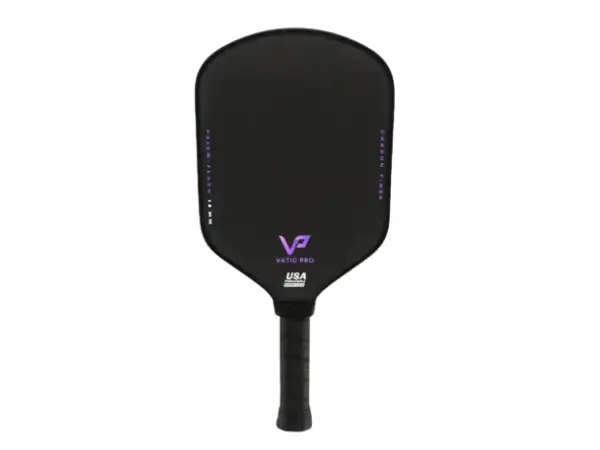
Quick Take
Easy to trust right away. It feels steady, forgiving, and good enough to keep up as your game gets better.
Key Specs
Weight: 7.8-8.2 oz
Core: 16mm polymer
Face: Raw carbon
Handle: 5.25 in
Shape: Standard
| ✅ Pros | ❌ Cons |
|---|---|
| Easy to control | Lacks putaway pop |
| Room to grow | Not for big hitters |
Best For
Beginners and improving rec players who want control first and don’t want to outgrow a paddle too fast.
Best Paddle for Intermediate Players

Quick Take
A real step-up paddle for players who want more shape on the ball and a clearer feel at contact.
Key Specs
Weight: 7.8-8.2 oz
Core: 16mm polymer
Face: Carbon friction
Handle: 5.5 in
Shape: Hybrid
| ✅ Pros | ❌ Cons |
|---|---|
| Great spin and feel | Can feel a bit heavy |
| Good reach, still stable | Needs cleaner contact |
Best For
Intermediate players moving into faster games and wanting a paddle that rewards cleaner swings and better habits.
Best Paddle for Advanced Players

Quick Take
Built for high-level players who want a lively, confident paddle that still stays composed when rallies speed up.
Key Specs
Weight: 8.0-8.4 oz
Core: 14mm foam core
Face: Charged carbon
Handle: 5.5 in
Shape: Hybrid
| ✅ Pros | ❌ Cons |
|---|---|
| Big power on demand | Small margin for misses |
| Feels very dialed-in | Less forgiving up top |
Best For
Advanced players and tournament regulars who can handle a less forgiving paddle and want more finishing power.
By Play Style
Best Paddle for Power
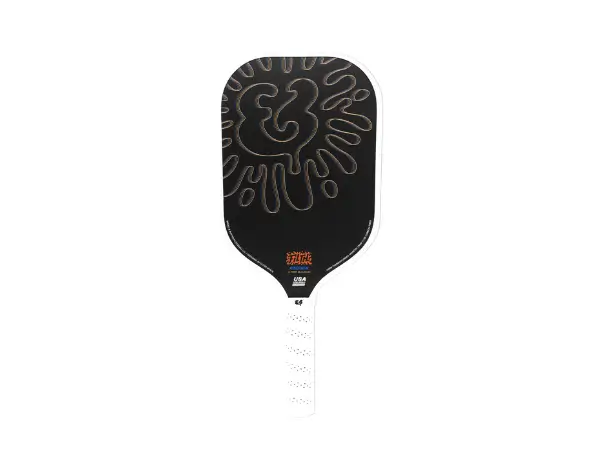
Quick Take
If you like driving the ball and speeding points up, this one leans into that without pretending to be a soft-game paddle.
Key Specs
Weight: 8.0-8.4 oz
Core: 14mm thermo core
Face: Raw carbon
Handle: 5.25 in
Shape: Elongated
| ✅ Pros | ❌ Cons |
|---|---|
| Drives come easy | Small sweet spot |
| Extra reach helps | Takes time to tame |
Best For
Singles players and aggressive hitters who want more reach and like taking control early in rallies.
Best Paddle for Control
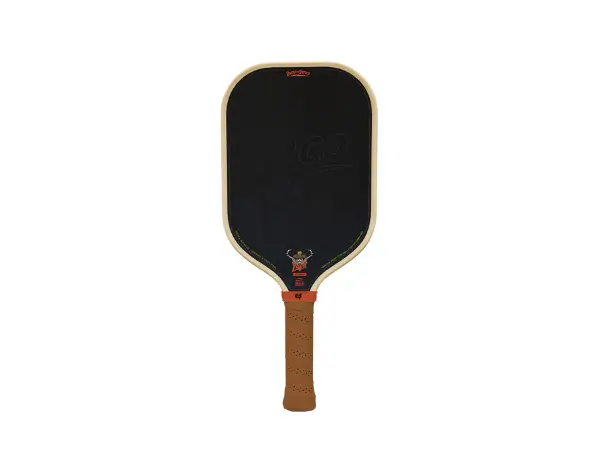
Quick Take
Soft-hands players will get along with this fast. It stays calm in tight exchanges and makes placement feel more natural.
Key Specs
Weight: 7.9-8.1 oz
Core: 16mm foam core
Face: Raw carbon
Handle: 5.3 in
Shape: Hybrid
| ✅ Pros | ❌ Cons |
|---|---|
| Excellent touch | Won’t wow power players |
| Very forgiving feel | Less punch on drives |
Best For
Control-first players who win with placement, blocks, and soft shots more than outright pace.
Best All-Court Paddle
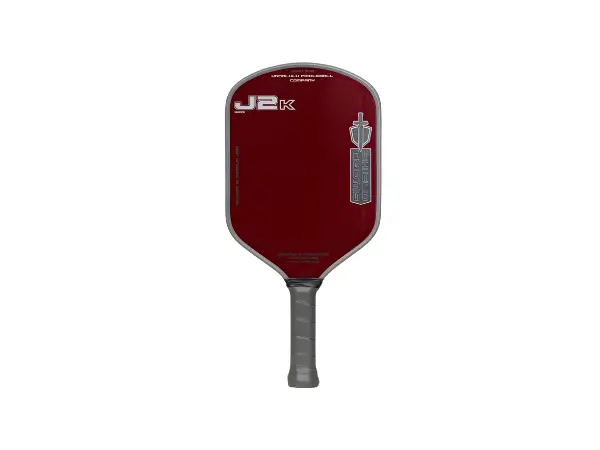
Quick Take
A true all-rounder. Nothing feels awkward here, and that’s exactly why so many balanced players would click with it.
Key Specs
Weight: 8.0-8.3 oz
Core: Multi-density foam
Face: Kevlar/carbon
Handle: 5.5 in
Shape: Hybrid
| ✅ Pros | ❌ Cons |
|---|---|
| Balanced and steady | Not ultra quick |
| Handles every shot | Not a power specialist |
Best For
Players who mix drops, drives, blocks, and counters and want one paddle that doesn’t push them into one style.
Best Paddle for Touch
Quick Take
If you live at the kitchen line and win with feel, this one makes that style easier. Soft shots just come off cleaner.
Key Specs
Weight: 7.9-8.1 oz
Core: 16mm foam core
Face: Raw carbon
Handle: 5.3 in
Shape: Hybrid
| ✅ Pros | ❌ Cons |
|---|---|
| Great feel on dinks | Lacks extra pop |
| Easy to place balls | Not for hard hitters |
Best For
Touch players who care more about drops, dinks, and resets than blowing people off the court.
Best Paddle for Spin

Quick Take
This is for players who shape the ball on purpose. It feels connected and lets you lean into spin without getting wild.
Key Specs
Weight: 8.2-8.5 oz
Core: Full foam core
Face: Raw carbon
Handle: 5.5 in
Shape: Hybrid
| ✅ Pros | ❌ Cons |
|---|---|
| Elite spin access | Can feel hefty |
| Very connected feel | Not for casual players |
Best For
Players who rely on heavy spin and already have clean swings they can repeat under pressure.
By Player Type
Best Paddle for Men

Quick Take
Strong swings suit this paddle best. It feels solid through contact and doesn’t get pushed around when you go after the ball.
Key Specs
Weight: 8.4-8.6 oz
Core: 16mm foam core
Face: Raw carbon
Handle: 5.5 in
Shape: Elongated
| ✅ Pros | ❌ Cons |
|---|---|
| Stable on hard swings | Heavy for some arms |
| Easy power and reach | Can feel demanding |
Best For
Athletic players with faster swings who want stability, reach, and a firmer finishing mindset.
Best Paddle for Women

Quick Take
Light, easy to move, and simple to live with. It favors comfort and consistency over flashy shot-making.
Key Specs
Weight: 7.1-7.5 oz
Core: 14.3mm poly core
Face: Fiberglass
Handle: 4.25 in
Shape: Widebody
| ✅ Pros | ❌ Cons |
|---|---|
| Light and easy to swing | Limited spin upside |
| Big forgiving face | Not a power paddle |
Best For
Players who want quick hands, less strain, and a paddle that feels easy in long rec games.
Best Paddle for Seniors
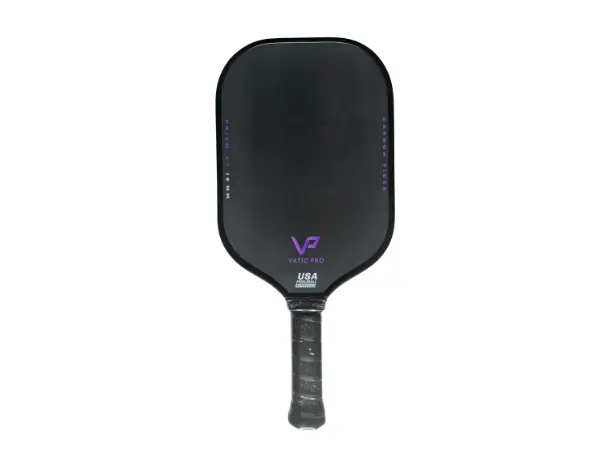
Quick Take
Comfort comes first here. It keeps things controlled, doesn’t feel harsh, and makes long sessions easier on the arm.
Key Specs
Weight: 7.3-7.7 oz
Core: 16mm polymer
Face: Carbon fiber
Handle: 5.25 in
Shape: Standard
| ✅ Pros | ❌ Cons |
|---|---|
| Easy on the arm | Lacks putaway pop |
| Steady all game | Spin is just okay |
Best For
Seniors and comfort-first players who want a steady paddle that keeps the game manageable and repeatable.
Best Paddle for Kids (Ages 14-18)
Quick Take
For teens playing real pickleball, this feels like actual gear — not a watered-down junior option. That’s a big deal.
Key Specs
Weight: 7.8-8.2 oz
Core: 16mm polymer
Face: Raw carbon
Handle: 5.25 in
Shape: Standard
| ✅ Pros | ❌ Cons |
|---|---|
| Feels like real gear | Needs some strength |
| Forgiving but capable | Not super explosive |
Best For
Teens who are improving fast and need a paddle that won’t feel limiting as their game gets more serious.
Best Paddle for Kids (Ages 11-13)

Quick Take
A legit junior option for kids who are already serious. It won’t feel toy-like or hold back a motivated player.
Key Specs
Weight: 7.3 oz
Core: Polymer core
Face: Carbon fiber
Handle: 4.0-4.25 in
Shape: Standard
| ✅ Pros | ❌ Cons |
|---|---|
| Serious junior option | Overkill for beginners |
| Light but still stable | Short handle only |
Best For
Competitive pre-teens who need a junior paddle that feels close to real adult gear.
Best Paddle for Kids (Ages 8-10)
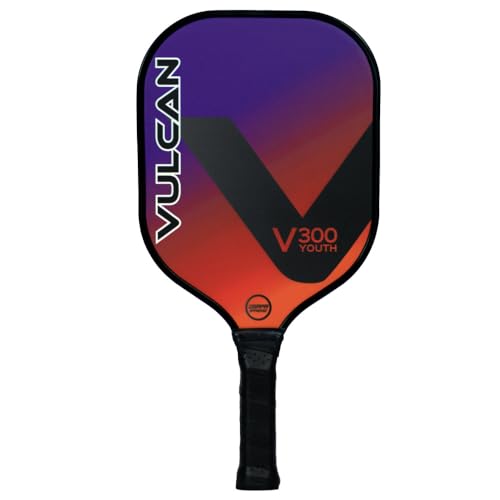
Quick Take
A solid middle step for kids improving quickly. It gives them room to learn without jumping straight into adult gear.
Key Specs
Weight: 7.0 oz
Core: Polymer core
Face: Composite face
Handle: 4.0 in
Shape: Widebody
| ✅ Pros | ❌ Cons |
|---|---|
| Easy for kids to manage | Handle may feel short |
| Forgiving on misses | Kids outgrow it fast |
Best For
Kids around 8 to 10 who need something more capable but still easy to handle.
Best Paddle for Kids (Ages 6-7)

Quick Take
Simple, light, and easy to start with. Good for young kids learning to connect with the ball and enjoy the game.
Key Specs
Weight: 6.5 oz
Core: 10mm poly core
Face: Textured glass
Handle: 4.0 in
Shape: Standard
| ✅ Pros | ❌ Cons |
|---|---|
| Very easy to swing | Not tournament legal |
| Helps kids make contact | Grip may need wrap |
Best For
Kids ages 6 to 7 who need a light paddle that keeps things fun and not frustrating.
Best Paddle for Kids (Ages 3-5)

Quick Take
This is about making pickleball possible for very young kids. Light weight matters more here than all-out performance.
Key Specs
Weight: ~6.0 oz
Core: Polymer core
Face: Fiberglass
Handle: 3.5-4.0 in
Shape: Standard
| ✅ Pros | ❌ Cons |
|---|---|
| Super light for little kids | Outgrown very quickly |
| Fun look keeps interest | Small sweet spot |
Best For
Toddlers and very young kids who need something tiny and easy enough to swing without getting tired.
By Material
Best Graphite Paddle
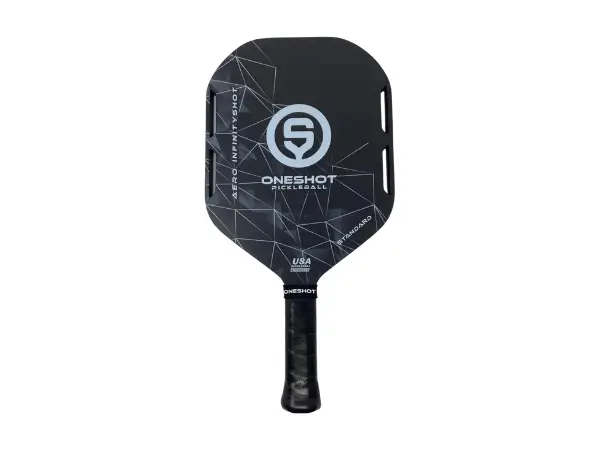
Quick Take
Crisp and quick through the air. If you like a firmer feel and fast handling, this one makes sense.
Key Specs
Weight: 7.5-7.9 oz
Core: 16mm polymer
Face: Graphite
Handle: 5.5 in
Shape: Elongated
| ✅ Pros | ❌ Cons |
|---|---|
| Crisp response | Less forgiving feel |
| Quick in hand | Spin trails top picks |
Best For
Players who want a lively, snappy paddle and don’t care as much about a softer, more cushioned feel.
Best Carbon Paddle
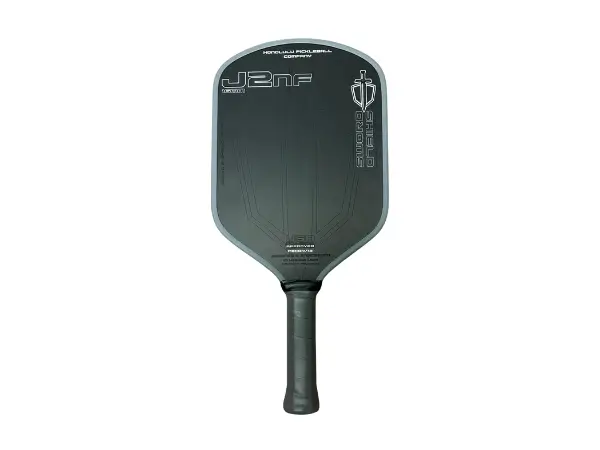
Quick Take
This is the safest great pick for most people. It’s forgiving, dependable, and doesn’t force you to play one specific way.
Key Specs
Weight: 8.0-8.3 oz
Core: Multi-density foam
Face: Carbon blend
Handle: 5.5 in
Shape: Hybrid
| ✅ Pros | ❌ Cons |
|---|---|
| Huge margin for error | Not the lightest feel |
| Feels steady everywhere | May be too safe for some |
Best For
Most players who want one paddle that feels easy to trust now and still makes sense as their game improves.
Best Fiberglass Paddle
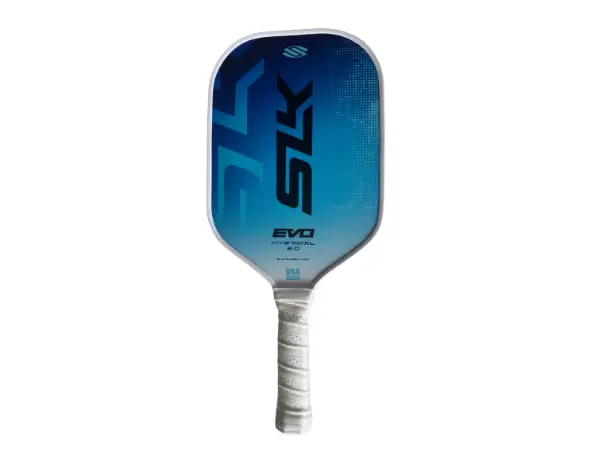
Quick Take
Predictable and comfortable. It doesn’t do anything wild, but that’s kind of the point for newer or touch-first players.
Key Specs
Weight: 7.8-8.2 oz
Core: 16mm polymer
Face: Fiberglass
Handle: 5.25 in
Shape: Hybrid
| ✅ Pros | ❌ Cons |
|---|---|
| Very easy to control | Limited spin ceiling |
| Nice soft feel | Can feel underpowered |
Best For
Beginners and control-first rec players who want a soft, easy paddle that keeps mistakes manageable.
Best Kevlar Paddle
Quick Take
This paddle makes a lot of sense if durability matters to you but you still want a balanced all-court feel.
Key Specs
Weight: 8.0-8.3 oz
Core: Multi-density foam
Face: Kevlar/carbon
Handle: 5.5 in
Shape: Hybrid
| ✅ Pros | ❌ Cons |
|---|---|
| Durable and steady | Not ultra quick |
| Balanced all around | Not a spin specialist |
Best For
Players who want a tough, dependable paddle that still feels versatile instead of one-note.
Best Polymer Paddle
Quick Take
What stands out here is how complete it feels. It doesn’t just do one thing well — it handles almost everything cleanly.
Key Specs
Weight: 8.0-8.3 oz
Core: Multi-density foam
Face: Carbon blend
Handle: 5.5 in
Shape: Hybrid
| ✅ Pros | ❌ Cons |
|---|---|
| Very complete feel | Not feather-light |
| Big margin for error | May feel too safe |
Best For
Players who want a forgiving, stable paddle with a broad skill range and very few obvious weak spots.
Best Thermoformed Paddle

Quick Take
A straightforward paddle with a firmer, livelier feel. Good for players who want decent all-around play without anything too fussy.
Key Specs
Weight: 7.9-8.2 oz
Core: 14mm thermo core
Face: Carbon fiber
Handle: 5.25 in
Shape: Standard
| ✅ Pros | ❌ Cons |
|---|---|
| Feels lively | Small sweet spot |
| Consistent enough | Not especially plush |
Best For
Newer players or backup-paddle shoppers who want a simple, dependable option with a little pop.
By Weight
Best Lightweight Paddle

Quick Take
If arm comfort and quick hands matter most, this stands out. It stays fast without feeling completely flimsy.
Key Specs
Weight: 6.9-7.3 oz
Core: 16mm polymer
Face: Raw carbon
Handle: 4.25 in
Shape: Standard
| ✅ Pros | ❌ Cons |
|---|---|
| Very fast at net | Less free power |
| Easy on tired arms | Gets pushed around |
Best For
Players who want less strain, faster hand speed, and a lighter paddle that still plays like a serious one.
Best Midweight Paddle
Quick Take
This is exactly why midweight paddles work for so many people. It feels stable, controlled, and easy to trust.
Key Specs
Weight: 8.0-8.3 oz
Core: Multi-density foam
Face: Carbon blend
Handle: 5.5 in
Shape: Hybrid
| ✅ Pros | ❌ Cons |
|---|---|
| Great weight balance | Not ultra light |
| Stable on all shots | Could feel too safe |
Best For
Players who want the sweet spot between quick handling and enough mass to stay solid through contact.
Best Heavyweight Paddle
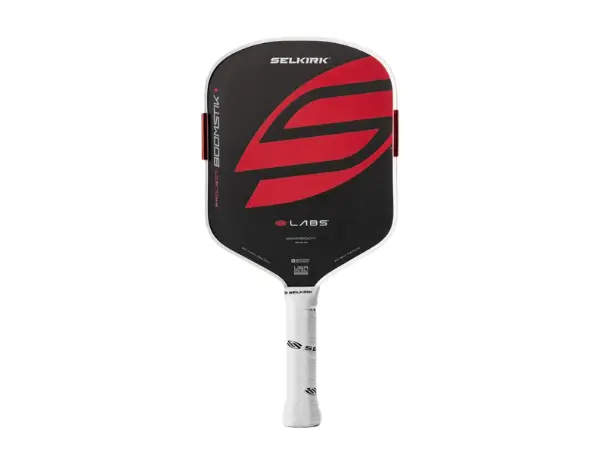
Quick Take
This one leans hard into weight and stability. Great if you like a heavy hit. Not great if your arm gets tired easily.
Key Specs
Weight: 8.4-8.8 oz
Core: 16mm foam core
Face: Carbon fiber
Handle: 5.6 in
Shape: Widebody
| ✅ Pros | ❌ Cons |
|---|---|
| Massive stability | Fatigue shows up fast |
| Big power potential | Too much paddle for some |
Best For
Power players and strong singles hitters who want the paddle to stay rock solid through big swings.
By Shape
Best Elongated Paddle
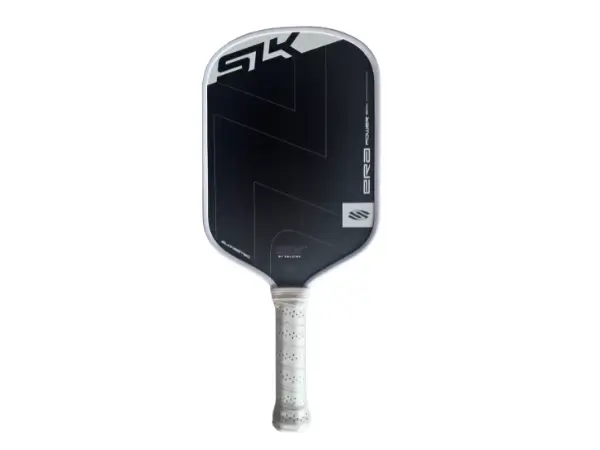
Quick Take
This is about reach and leverage. It helps aggressive players pressure the court a little more with every swing.
Key Specs
Weight: 8.1-8.5 oz
Core: 16mm polymer
Face: Raw carbon
Handle: 5.75 in
Shape: Elongated
| ✅ Pros | ❌ Cons |
|---|---|
| Extra reach matters | Misses punish more |
| Easy pace on drives | Less doubles-friendly |
Best For
Singles players and hard hitters who want a longer shape that helps them attack more often.
Best Widebody Paddle
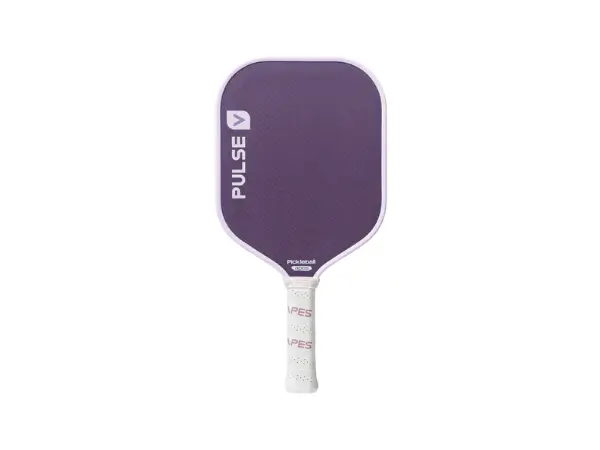
Quick Take
Widebody paddles can feel clunky. This one doesn’t. It stays forgiving without feeling dull or dead.
Key Specs
Weight: 8.2-8.4 oz
Core: 16.5mm poly core
Face: Aramid weave
Handle: 5.5 in
Shape: Widebody
| ✅ Pros | ❌ Cons |
|---|---|
| Big sweet spot | A bit slow in hand |
| Feels stable and solid | Needs break-in time |
Best For
Doubles players who want a bigger sweet spot and value consistency more than added reach.
Best Hybrid Paddle
Quick Take
Hybrid shapes are all about balance, and this one gets that right. Nothing feels too extreme in either direction.
Key Specs
Weight: 8.0-8.3 oz
Core: Multi-density foam
Face: Kevlar/carbon
Handle: 5.5 in
Shape: Hybrid
| ✅ Pros | ❌ Cons |
|---|---|
| Nicely balanced feel | Not ultra quick |
| Versatile shot range | Not highly specialized |
Best For
Players who want a paddle shape that can do a bit of everything without leaning too hard into one style.
By Budget
Best Paddle Under $50

Quick Take
A basic starter paddle that keeps the learning curve gentle. Fine for getting into the game, not built for long-term ceiling.
Key Specs
Weight: 7.8-8.2 oz
Core: 16mm polymer
Face: Fiberglass
Handle: 4.25 in
Shape: Standard
| ✅ Pros | ❌ Cons |
|---|---|
| Beginner-friendly feel | Spin is very limited |
| Easy to pick up | Durability is average |
Best For
True beginners who just want something simple and forgiving while they figure out if they like pickleball.
Best Paddle Under $100
Quick Take
A practical starter set. It gets two people on court with paddles that are good enough to learn real basics.
Key Specs
Weight: 7.9-8.2 oz each
Core: 14mm thermo core
Face: Carbon fiber
Handle: 5.25 in
Shape: Standard
| ✅ Pros | ❌ Cons |
|---|---|
| Easy way to start | Smaller sweet spot |
| Solid everyday play | You’ll want more later |
Best For
Couples, friends, or new players who want a ready-to-go set and aren’t chasing high-end feel.
Best Paddle Under $200
Quick Take
This feels like the sweet spot of the whole article. You get a paddle that plays like a top-tier option without feeling overly niche.
Key Specs
Weight: 8.0-8.3 oz
Core: Multi-density foam
Face: Carbon blend
Handle: 5.5 in
Shape: Hybrid
| ✅ Pros | ❌ Cons |
|---|---|
| Premium all-around feel | Not the lightest feel |
| Huge sweet spot | Might feel too safe |
Best For
Players who want a serious all-court paddle with very few weak spots and broad appeal across skill levels.
Best Paddle Set
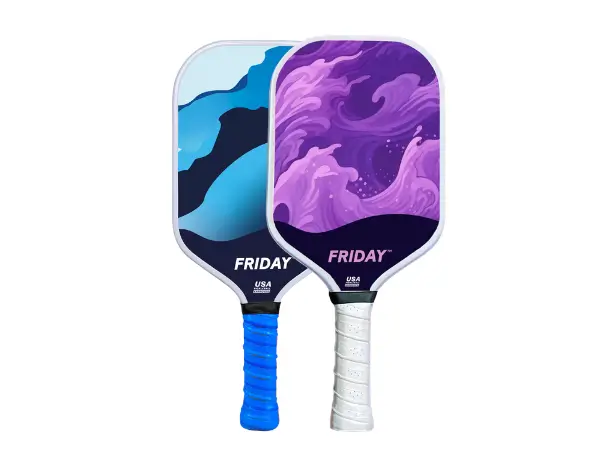
Quick Take
This is a practical way to get two people on court with paddles that are decent enough to learn real fundamentals.
Key Specs
Weight: 7.9-8.2 oz each
Core: 8mm PP honeycomb
Face: Carbon fiber
Handle: 5.5 in
Shape: Standard
| ✅ Pros | ❌ Cons |
|---|---|
| Easy way to start | Smaller sweet spot |
| Solid everyday play | You’ll want more later |
Best For
Couples, friends, or brand-new players who want a ready-to-go set without overthinking the whole purchase.
Buying Guide
Core Material & Thickness
Polymer honeycomb cores are the standard because they feel controlled, reliable, and easy to play with. They work well for beginners and most intermediate players. Foam cores feel more solid and usually hold their performance longer, but they tend to be a bit heavier.
Thickness changes the feel a lot. A 16mm paddle is softer, more forgiving, and better for control. A 14mm paddle feels livelier and gives you more pop, but it’s less forgiving on mishits.
Surface Materials
Raw carbon is the go-to if you want more spin and a more connected feel. Fiberglass feels softer and more forgiving, which makes it a strong choice for newer players. Graphite feels crisp and quick, though it usually can’t match raw carbon for spin. Thermoformed builds are known for durability and a more stable response across the face.
Paddle Shape
Standard shapes are the safest choice for most players because they balance forgiveness, reach, and versatility. Elongated paddles give you more reach and power, but the sweet spot gets smaller. Widebody paddles offer more forgiveness, which helps a lot in doubles. Hybrid shapes sit somewhere in the middle.
Weight & Grip Size
Lighter paddles are easier on the arm and quicker at the net. Midweight paddles fit most players best. Heavier paddles add stability and power, but they can wear you out faster.
Common Mistakes
Pro Endorsements
Pro players have sponsorship deals and game styles that probably don’t match yours. Their needs at 5.0+ level differ dramatically from what works at 3.5 to 4.5. Choose based on your actual game, not someone else’s endorsement deal.
Weight Assumptions
More weight doesn’t automatically improve your game—it often just makes your arm tired. Many players actually perform better with lighter paddles that let them swing faster and react quicker. Match weight to your strength and playing style.
Sweet Spot
That “pure” feeling from a small sweet spot means nothing when you’re scrambling at the net and missing by half an inch. Forgiving sweet spots keep balls in play during fast exchanges. Unless you’re an advanced player who consistently finds center contact, prioritize forgiveness.
Final Verdict
The Honolulu J2NF is the best overall pick. It stands out because it’s the easiest paddle here for most players to trust long term: balanced, forgiving, durable, and versatile without feeling bland, while the Vatic Pro Prism Flash still makes the most sense if you’re just starting out. Want the safest all-around choice? Get the J2NF.
FAQs
How quickly does paddle grit degrade with regular play?
Raw carbon fiber surfaces lose approximately 10 percent of their grit texture within the first 10 hours of competitive play, with paint-grit paddles degrading even faster—sometimes within days. By 50 hours, most paddles experience noticeable spin degradation, and recreational players typically see 30-35 percent grit loss after six months of regular use.
Can you legally modify paddles with lead tape for tournaments?
Yes, adding lead tape to your paddle remains legal for USA Pickleball sanctioned tournaments as long as the modified paddle still meets size requirements—combined length and width under 24 inches, maximum length of 17 inches. Players commonly add tape to paddle edges for increased power or handle areas for better balance customization.
What causes paddle delamination and can it be prevented?
Delamination occurs when adhesive bonds between face and core layers fail, typically from temperature extremes, moisture exposure, or manufacturing defects. Prevention includes storing paddles at room temperature, keeping them dry, avoiding car trunk storage, and using protective cases. Once delamination starts, paddles cannot be repaired and require replacement for safety.
What handle length works best for two-handed backhands?
Players using two-handed backhands typically prefer handle lengths of 5.5 inches or longer to comfortably accommodate both hands without crowding. Standard 5.25-inch handles can work but feel cramped, while elongated paddles with 5.75-inch handles provide optimal spacing. Remember that longer handles reduce paddle face area due to the 24-inch combined dimension rule.
What temperature ranges damage pickleball paddles during storage?
Extreme temperatures below freezing make honeycomb cores brittle and prone to cracking, while heat above 120°F softens adhesives causing delamination and warping. Never leave paddles in car trunks where temperatures can exceed 150°F in summer or drop below freezing in winter. Ideal storage temperature ranges between 50-80°F with moderate humidity.
What makes paddles quieter and which meet noise requirements?
Paddles with 16mm+ cores, heavier weights, and foam construction produce significantly less noise than thin 14mm paddles. USA Pickleball’s Quiet Paddle certification requires decibel levels below 80dB and frequency ranges below 600Hz—compared to standard paddles hitting 85-95dB. Look for USA Pickleball Quiet Approved certification for noise-restricted communities.
What warranty coverage should you expect for paddle purchases?
Standard paddle warranties range from 3-6 months for budget models to 12 months for premium paddles, specifically covering manufacturer defects and delamination. Some manufacturers like Paddletek offer industry-leading 5-year warranties against dead spots. Always register paddles immediately after purchase, keep receipts, and note that warranties typically don’t cover normal wear or cosmetic damage.
