

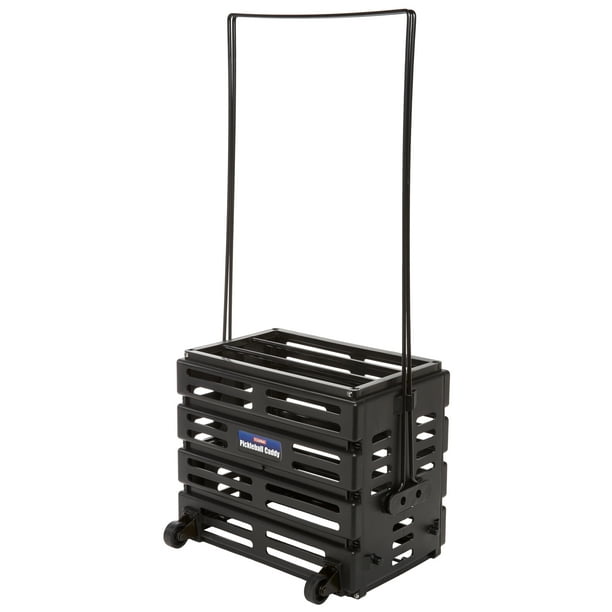
The best pickleball hopper for most players is the Tourna Pickleball Deluxe Caddy with Wheels because it balances useful capacity, easy transport, and dependable everyday function.
This guide is for rec players, regular drillers, and coaches who want a hopper that fits the way they actually practice. It breaks down the real differences in size, portability, durability, and storage so the choice feels a lot more straightforward.
Best Overall Hopper
Quick Take
This is the easy pick for most players. It holds enough balls for real practice, rolls around without fuss, and doesn’t feel oversized for a normal week on court.
Key Features
- 50-ball capacity for typical practice sessions
- Handles both indoor and outdoor balls with stable construction that won’t tip during practice sessions
- Wheels allow you to roll rather than lug the heavy basket across courts
- Assembly takes about 10 minutes
- Top bars function as secure lid for transport
| ✅ Pros | ❌ Cons |
|---|---|
| Easy to roll around | Not for huge sessions |
| Secure top keeps balls in | Assembly takes a bit |
Best For
Players who want a simple, dependable hopper for regular solo or partner drills. Great if you practice a few times a week and want something easy to move and easy to store.
Runner-Up
Quick Take
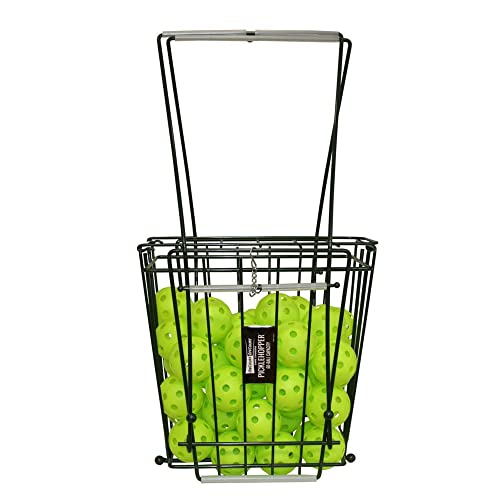
Feels like a step up for frequent practice. It handles longer sessions well, stays dependable, and makes pickup feel smoother than most basic hoppers.
Key Features
- 60-ball capacity ideal for extended practice sessions
- Superior construction quality with reinforced joints
- Tool-free assembly with easy-grip knobs for hand-adjustments
- Smooth, reliable ball feeding perfect for machine use
| ✅ Pros | ❌ Cons |
|---|---|
| Smooth ball pickup | Less handy to carry |
| Built for heavy use | More than most need |
Best For
Coaches, ball machine users, and players who drill often and want something sturdier for repeated use. Best when long-term dependability matters more than keeping things extra light.
Budget Pick

Quick Take
A solid pick if you want something light, simple, and easy to stash away. It covers the basics without taking over your trunk, closet, or practice routine.
Key Features
- Holds 30-42 balls depending on loading method
- Weighs only 3.5 pounds for easy portability
- Foldable design that doesn’t dominate storage space
- Simple wire frame with minimal maintenance needs
| ✅ Pros | ❌ Cons |
|---|---|
| Light and easy to carry | Not for long drills |
| Folds down neatly | Feels pretty basic |
Best For
Casual players who practice once or twice a week and don’t need a big hopper. Also nice if storage space is tight and you want something easy to tuck away.
Best High Capacity Hopper

Quick Take
This one is all about volume. If stopping to refill keeps breaking your rhythm, the big basket and rolling setup make longer sessions much easier to manage.
Key Features
- 100+ ball high-capacity design for extended drilling sessions
- Reinforced construction with sturdy wheels for rough surfaces
- Included carry bag for transport versatility
- Stress-point reinforcement for extended lifespan
- Weighs 8.5 pounds (heavier than compact models)
| ✅ Pros | ❌ Cons |
|---|---|
| Huge ball capacity | Heavier than most |
| Easy to move on court | Takes more storage room |
Best For
Ball machine owners and group drillers who burn through a lot of balls fast. Best when capacity matters more than keeping your setup light and compact.
Best Hopper for Coaches

Quick Take
Made for busy sessions. It carries a lot, rolls easily, and keeps balls plus small extras together so coaching or group drills feel less scattered.
Key Features
- 80-120 ball capacity for coaching and group sessions
- Multiple pockets accommodate paddles, cones, and training aids
- Aluminum construction balances durability with manageable weight
- Folds in 3 seconds with included storage bag
- Wheels for easy court-to-court movement
- Premium price point around $100
| ✅ Pros | ❌ Cons |
|---|---|
| Carries a lot of balls | More than casuals need |
| Handy extra pockets | Bulkier than basic picks |
Best For
Coaches, clinic leaders, and players who run group drills and want one setup for balls plus a few extras. Overkill for someone who mostly hits casually.
Buying Guide
Capacity
Match ball count to your practice style. Solo players need 30-40 balls. Partner drilling requires 50-70 balls. Coaches and ball machine users benefit from 80-120 balls. Count your typical session usage and add 20 percent for buffer.
Weight & Wheels
Consider your complete transport routine. A 4-pound hopper fitting in your trunk beats an 8-pound cart you avoid carrying. Wheels become essential beyond 50 feet of walking distance. Test lifting it into your vehicle before buying.
Construction Materials
Plastic frames suit recreational players practicing twice weekly. Metal construction pays off for frequent users drilling 4-plus sessions weekly. Aluminum balances durability with manageable weight. Weather resistance matters if stored in vehicles.
Storage Space
Measure available home storage before purchasing. Foldable designs suit apartments and closets. Non-collapsible models need dedicated garage or storage room space. Consider where it sits between sessions.
Assembly Style
Tool-free assembly saves time at courts and enables quick setup changes. Models requiring screwdrivers add friction to your routine. Check reviews mentioning assembly difficulty and time requirements.
Common Mistakes
Overbuying Capacity
Bigger isn’t always better. A 150-ball cart becomes dead weight if you only use 40 balls. Extra capacity means extra bulk, weight, and storage needs. Start moderate and upgrade if needed.
Ignoring Transport Reality
That premium cart looks great until it won’t fit your trunk or apartment closet. Measure your vehicle cargo space and home storage before ordering.
Final Verdict
The Tourna Pickleball Deluxe Caddy with Wheels is the top pick for most players. It keeps practice simple, moves easily, and fits the kind of routine most people actually have. If you drill hard and want something more heavy-duty, the OnCourt OffCourt Picklehopper 60 makes more sense. Buy for your real practice habits, not the setup you imagine having later.
FAQs
How many pickleballs should your hopper hold?
If you mostly practice alone, 30 to 40 balls is usually enough. For partner drills, aim for 50 to 70. Coaches and ball machine users will usually want 80 or more.
When do wheels actually make a big difference?
Wheels matter most when you’re walking across several courts, moving during drills, or dealing with back strain. If your hopper stays in one spot near your bag, you can probably skip them.
Is a foldable hopper better for home storage?
Yes, if closet space is tight or you carry gear in a smaller car. Foldable hoppers are easier to stash between sessions, though fixed-frame models usually feel a bit sturdier day to day.
Can one hopper work for solo and group drills?
Sometimes, yes. A mid-size hopper around 50 to 60 balls can handle solo reps and small group work. Once you start feeding several players at once, bigger capacity becomes much more useful.
What’s the smartest first hopper for beginners?
A light, simple hopper is usually the best start. Beginners don’t need huge capacity or lots of extras. What matters most is easy carrying, easy storage, and enough balls for steady repetition.
