

The Franklin X-40 is the best pickleball ball for most outdoor players, with the Selkirk Pro S1 winning on durability and the Vulcan VPRO FLIGHT Gen 2 standing out for competitive play.
This guide is written for players at every level who want clear, honest answers — covering what actually separates indoor from outdoor balls, how climate affects your choice, and which balls meet official tournament standards.
Best Ball Overall

Quick Take
It’s the ball most outdoor players already know. Predictable, consistent, plays a little slower — which is honestly great for working on your game. Widely used enough that you’ll rarely feel out of place on any outdoor court.
| ✅ Pros | ❌ Cons |
|---|---|
| Consistent, predictable bounce | Not for cold weather |
| Works on most outdoor courts | Not an indoor option |
Best For
Recreational and intermediate players who want something dependable that works on nearly every outdoor court. Great if consistency matters more to you than chasing the fastest ball on the market.
Budget Pick
Quick Take
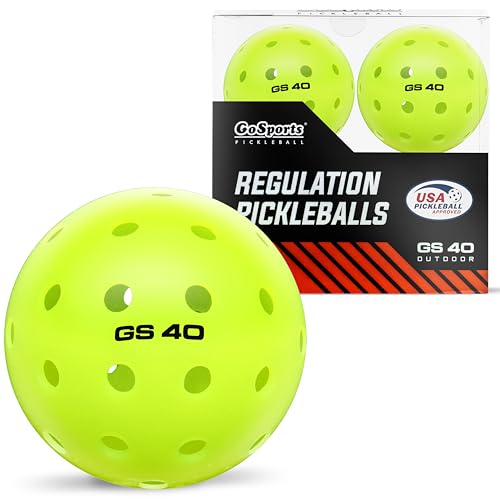
Honestly, it holds up way better than you’d expect. Plays close to the Franklin X-40 in feel and consistency. If you’re going through balls fast or buying in bulk, this just makes sense.
| ✅ Pros | ❌ Cons |
|---|---|
| Solid consistent performance | Less consistent over time |
| Works well buying in bulk | Not tournament approved |
Best For
High-volume players, casual groups, or facilities buying in bulk. It’s the right call if you want decent performance without stressing about how many balls you go through.
Best Ball for Beginners

Quick Take
Heavier than most balls, which actually helps in windy conditions and makes it more forgiving for new players. It’s built tough and handles aggressive hitting well. Not the flashiest option, but it does its job reliably.
| ✅ Pros | ❌ Cons |
|---|---|
| Excellent wind resistance | Slower than most balls |
| Forgiving for new players | Struggles in cold temps |
Best For
New players still building technique, or anyone tired of wind messing with their game outdoors. Good pick if you want something that holds up to heavy use and doesn’t demand precision to play well.
Best Ball for Durability

Quick Take
It comes with a one-year no-crack warranty — and actually earns it. Plays faster and bouncier than most outdoor balls, handles cold weather well, and is genuinely one of the toughest balls you’ll find anywhere.
| ✅ Pros | ❌ Cons |
|---|---|
| One-year no-crack warranty | Faster pace, harder to control |
| Cold weather resistant | Not ideal for beginners |
Best For
Cold-weather players and anyone fed up with balls cracking mid-match. Advanced players who can handle the faster pace will get the most out of it, but the durability alone makes it worth considering.
Best Ball for Speed

Quick Take
The official PPA Tour and MLP ball. It’s fast, it spins, and it’s built to handle serious competition. The second generation fixed the durability complaints from the first. If you play at a high level, this is worth knowing.
| ✅ Pros | ❌ Cons |
|---|---|
| Highest energy return | Too fast for beginners |
| Improved Gen 2 durability | Not ideal for slow play |
Best For
Competitive and advanced players, especially those prepping for PPA Tour or MLP events. If you’re already comfortable with fast ball speeds and want to play exactly what the pros use, this is it.
Best Tournament Ball

Quick Take
The fastest mainstream ball you’ll find. Official ball of the USA Pickleball Nationals, so it’s got serious competitive credibility. Just know it’s unforgiving — if you’re not at least a 4.0 player, it can feel overwhelming.
| ✅ Pros | ❌ Cons |
|---|---|
| Fastest mainstream ball | Cracks in cold weather |
| National tournament standard | Too fast for casual play |
Best For
Advanced players (4.0 and up) who want tournament-level speed and are preparing for or competing in USA Pickleball events. Not the right fit if you’re still developing consistency or control.
Best Indoor Ball

Quick Take
If you’re serious about indoor play, this is probably the best option going. It plays faster than most indoor balls and handles spin well, which makes it easier to carry your outdoor game inside without a big adjustment.
| ✅ Pros | ❌ Cons |
|---|---|
| Bridges indoor/outdoor play | Only works indoors |
| Good spin for indoor play | Takes adjustment to feel |
Best For
Outdoor players who also practice or compete indoors. Especially useful if you hate feeling like you’re playing a completely different game just because you moved inside. Great for maintaining your outdoor rhythm.
Best Budget Indoor Ball

Quick Take
A solid choice for indoor-only play. Nothing fancy, but it bounces consistently on gym floors and comes in multiple colors. It does exactly what you need it to do without any frills.
| ✅ Pros | ❌ Cons |
|---|---|
| Consistent indoor bounce | Outdoor use not possible |
| Multiple color options | No standout features |
Best For
Indoor facilities, gym players, and anyone who plays primarily in a controlled indoor environment. Good if you want a dependable indoor ball without overthinking it.
Best Hybrid Ball
Quick Take
Plays indoors and outdoors without switching balls — which is genuinely convenient. It’s not officially USAPA approved, so keep that in mind for sanctioned play. But for casual use across both settings, it works surprisingly well.
| ✅ Pros | ❌ Cons |
|---|---|
| Works indoors and outdoors | Not USAPA approved |
| Great spin capability | Average durability |
Best For
Players who bounce between indoor and outdoor courts and hate dealing with two separate ball types. Facilities running both formats. Not for anyone competing in official sanctioned tournaments.
Buying Guide
Playing Environment
Match your ball to where you play. Outdoor courts need 40-hole balls with harder plastic to handle wind and rough surfaces. Indoor facilities require 26-hole balls with softer construction for gym floors. Using the wrong type kills performance and durability.
Skill Level
Beginners benefit from slower balls like Franklin X-40 that allow time to develop technique. Advanced players (4.0+) prefer faster tournament balls like Durafast 40 or Vulcan VPRO FLIGHT that reward precision and power.
Climate Considerations
Cold weather players need balls like Selkirk Pro S1 that resist cracking below 45°F. Hot climate players should avoid balls that soften excessively in heat. Temperature matters more than most people realize.
Budget vs Performance
Premium balls ($3-5 each) offer better consistency and durability. Mid-range options ($2-3) work well for most recreational players. Budget balls ($1-2) suit practice sessions and high-usage facilities where cost matters most.
Mistakes
Environment Mismatch
The biggest mistake is using outdoor balls indoors or vice versa. Outdoor balls skid unpredictably on smooth floors and create excessive noise. Indoor balls can’t handle wind or abrasive outdoor surfaces.
Tournament Standards
Players practicing with different balls than their tournaments use struggle with adjustment. If you compete in APP Tour events, practice with Franklin X-40. PPA Tour players need Vulcan VPRO FLIGHT experience.
Price Priority
The cheapest balls often crack faster, making them more expensive long-term. Calculate cost per session rather than cost per ball. A $4 ball lasting 10 sessions beats a $1 ball cracking after two.
Final Verdict
The Franklin X-40 is the right ball for most players — it’s dependable, widely recognized, and works across a huge range of outdoor settings without demanding anything from you. Competitive players should match their ball to whatever tour they’re preparing for, and indoor players will be well-served by the GAMMA Photon. When in doubt, start with the Franklin X-40 and build from there.
FAQs
How long should pickleball balls last?
Durability varies significantly based on play frequency, shot intensity, and ball brand. Premium outdoor balls might last 3-10 sessions before cracking, while more durable options like the Selkirk Pro S1 may last substantially longer. Indoor balls typically enjoy longer lifespans due to less abrasive playing surfaces.
Do indoor and outdoor balls really play differently?
Yes. Outdoor balls have 40 smaller holes and harder plastic for wind resistance and durability on rough surfaces. Indoor balls feature 26 larger holes with softer construction optimized for smooth gym floors. Using the wrong type compromises performance significantly.
Can I use indoor balls outdoors or vice versa?
While it’s possible, it’s not recommended. Indoor balls won’t perform well in wind and will wear faster on rough outdoor surfaces. Outdoor balls may skid unpredictably on smooth indoor surfaces and produce excessive noise.
Why do pickleballs crack?
Plastic fatigue from repeated impacts, cold temperatures that make the material brittle, and manufacturing inconsistencies all contribute to cracking. Harder balls typically crack more readily than softer ones.
What colors are best for visibility?
Neon yellow and green provide optimal visibility in most conditions. For indoor play, select colors that contrast with your court’s floor color.
How does temperature affect pickleball balls?
Cold weather makes many balls brittle and prone to cracking, especially below 45°F. Heat can soften balls excessively, affecting bounce consistency. Temperature-resilient balls like Selkirk Pro S1 maintain performance across wider temperature ranges.
Should beginners buy tournament-grade balls?
Not necessarily. Tournament balls often play faster and harder, which can frustrate skill development. Beginners benefit more from slower, more forgiving balls like Franklin X-40 that allow time to build technique and consistency.
