

The best lightweight pickleball paddles weigh between 7.5 and 7.8 ounces — light enough to keep your arm fresh through long sessions, stable enough to hold up when the rallies get intense. Whether you’re a competitive 4.0+ player or just making the switch from something heavier on your joints, this guide covers three distinct picks for every skill level.
Top 3 Paddles
| Paddle | Category | Best For | Strength | Price |
|---|---|---|---|---|
| Pursuit MX 6.0 | Best Overall | Advanced | Spin | $$ |
| Bantam ALW-C | Runner-Up | Net Players | Quick Hands | $$ |
| Prism Flash | Budget Pick | Rec Players | Forgiving | $ |
Best Overall

Quick Take
If you’re at 4.0+ and want a paddle that actually rewards your mechanics, this is it. The elongated shape adds reach, and the spin is genuinely outstanding. Not for beginners — it punishes sloppy footwork.
Key Specs
- Core: 16mm polymer honeycomb
- Face: Raw T700 carbon fiber
- Weight: 7.7-8.0 oz
- Shape: Elongated
- Handle: 5.75″
| ✅ Pros | ❌ Cons |
|---|---|
| Outstanding spin off the face | Steep learning curve |
| Elongated shape adds reach | Too demanding for beginners |
Best For
Competitive players at 3.5 and above who’ve outgrown a more forgiving paddle and want something that rewards cleaner mechanics. Also great for players who rely on spin-heavy shots and want the extra reach an elongated shape brings.
Runner-Up

Quick Take
One of the quickest-handling paddles you’ll find in standard shape. It’s genuinely fast at the net, the spin is legit, and it won’t kill your arm. The shorter handle is a tradeoff you’ll need to make peace with.
Key Specs
- Core: 14.3mm polymer honeycomb
- Face: PT-700 raw carbon fiber
- Weight: 7.5-7.8 oz
- Shape: Standard
- Handle: 5″
| ✅ Pros | ❌ Cons |
|---|---|
| Fast hand speed at the net | Short handle limits options |
| Strong spin performance | Face wears faster over time |
Best For
Kitchen-line specialists and net-heavy players who prize fast hands over raw power. Also solid for players coming off a heavier paddle who want to reduce arm strain without giving up spin or punchiness.
Budget Pick
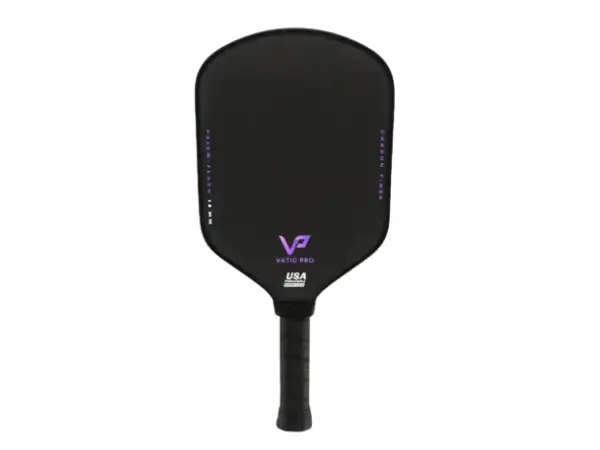
Quick Take
Solid paddle for players who want real control and a softer feel without overthinking their gear choice. Surprisingly forgiving for its level. Good for developing players who want a paddle that’ll hold up as they improve.
Key Specs
- Core: 16mm polymer honeycomb with polyurethane inserts
- Face: Raw carbon fiber
- Weight: 7.9-8.2 oz
- Shape: Hybrid
- Handle: 5.25″
| ✅ Pros | ❌ Cons |
|---|---|
| Forgiving for developing games | Heavier end of lightweight |
| Softer feel, great touch | Not ideal for advanced play |
Best For
Players building their game who want a capable, forgiving paddle that won’t hold them back as they improve. Also a solid pick for recreational players who want reliable performance and a comfortable, softer feel.
Paddle Specs
| Paddle | Category | Shape | Weight | Core | Face | Power | Control | Spin | Sweet Spot | Price |
|---|---|---|---|---|---|---|---|---|---|---|
| Pursuit MX 6.0 | Best Overall | Elongated | 7.7-8.0 Oz | 16Mm Poly | Raw T700 | High | Medium | High | Medium | $$ |
| Bantam ALW-C | Runner-Up | Standard | 7.5-7.8 Oz | 14.3Mm Poly | PT-700 | Med-High | Med-High | High | Large | $$ |
| Prism Flash | Budget Pick | Hybrid | 7.9-8.2 Oz | 16Mm C7 Poly | Raw T700 | Medium | High | Med-High | Medium | $ |
Buying Guide
Weight Range
Lightweight paddles weigh 7.8 ounces or less. Most players perform best with paddles between 7.5-7.8 ounces. Paddles under 7.3 ounces may feel unstable.
Core Thickness
Thick cores (16mm) provide better control and softer feel. Thin cores (13-14mm) generate more power. Choose thick cores for control, thin cores for power.
Face Material
Raw carbon fiber creates more spin but wears faster. Graphite lasts longer but produces less spin. Carbon fiber typically wears out after 6-12 months of regular use.
Sweet Spot
Standard shapes have larger sweet spots. Elongated shapes provide more reach but require better accuracy. Beginners should choose standard shapes.
Mistakes
Minimum Weight
Many players select the lightest available option without testing. Paddles under 7.3 ounces often feel unstable during volleys. The 7.5-7.8 ounce range provides better control for most skill levels.
Core Type
Players focus on face material while overlooking core construction. Core thickness affects ball feel more than surface texture. Match core thickness to your current skill gaps.
Pro Endorsements
Professional players use equipment suited to advanced techniques. Their paddle choices may not translate to recreational play. Select based on your actual skill level and physical needs.
Final Verdict
The Engage Pursuit Pro MX 6.0 is the clear top pick — it delivers the most complete package of any lightweight option here, and it’s built to grow with you as your game improves.
The Bantam ALW-C is for players who want quick hands above all else.
The Vatic Pro Prism is your starting point if you’re still developing. Stop overthinking the gear and go play.
FAQs
Will adding lead tape ruin a lightweight paddle?
Not necessarily. Strategic lead tape placement can improve stability without killing maneuverability. Just add weight gradually—start with half-inch strips at specific spots. Most players find adding 0.2-0.4 ounces maintains the lightweight feel while reducing vibration and improving power.
Can beginners start with lightweight paddles?
Absolutely, and it’s often smart. Lighter paddles help beginners develop proper technique without muscling shots. They’re also more forgiving on joints while you’re learning. Just avoid ultra-light options under 7.3 ounces that might feel too twitchy and unstable for developing consistent fundamentals.
Can older players benefit more from lightweight?
Definitely. Reduced weight means less joint stress and better endurance during long matches. If you’re dealing with shoulder issues, arthritis, or just want to play longer without fatigue, lightweight paddles are game-changers. The quick maneuverability also helps compensate for slightly slower reaction times.
Do lightweight paddles break easier than heavy ones?
There’s no direct correlation between weight and durability. Core construction and face material matter more. Cheap lightweight paddles with thin cores might crack easier, but quality lightweight paddles like those reviewed here use robust materials that hold up just fine with proper care.
