

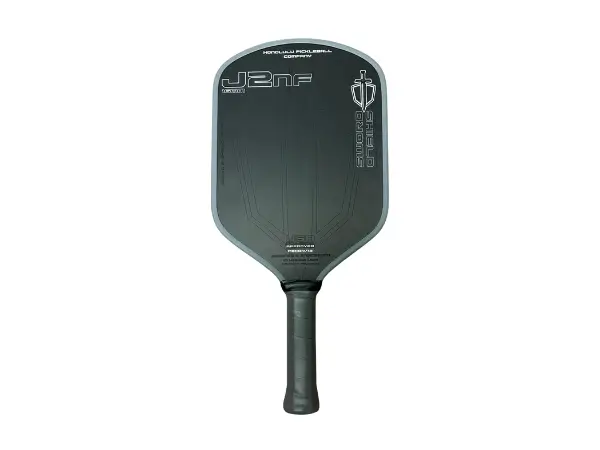
The best carbon fiber pickleball paddle for most players is the Honolulu J2NF. Carbon fiber has become the standard face material at every level of the game — recreational through professional — thanks to how it delivers spin, consistency, and durability in one package.
Whether you’re still building your game or playing competitively, this breakdown cuts to what actually matters so you can choose with confidence.
Top 3 Paddles
| Paddle | Category | Best For | Strength | Price |
|---|---|---|---|---|
| J2NF | Best Overall | Intermediates | Balanced | $$ |
| Perseus | Runner Up | Advanced | Power | $$$ |
| Prism | Budget Pick | Beginners | Control | $ |
Best Overall Paddle
Quick Take
The J2NF is one of those rare paddles that works for almost everyone. Huge sweet spot, real spin, and a lively-but-controlled feel that doesn’t punish you for off-center hits. It’s genuinely hard to outgrow.
Key Specs
- Core: 16mm full foam
- Face: Raw carbon fiber/fiberglass blend
- Weight: 8.0-8.3 oz
- Shape: Hybrid
- Handle: 5.25″
| ✅ Pros | ❌ Cons |
|---|---|
| Forgiving off-center hits | Feel is too muted for some |
| Works for all skill levels | Heavier than some prefer |
Best For
Players who want one paddle that handles everything. Whether you’re drilling at the kitchen, ripping cross-court drives, or stepping into competitive play — this adapts to your game instead of fighting it.
Runner-Up

Quick Take
A no-nonsense competitive paddle. Strong, precise, and built for players who’ve put in the reps. It rewards developed mechanics — more power and placement than most people will ever need.
Key Specs
- Core: 16mm propulsion core
- Face: Textured carbon fiber
- Weight: 8.1 oz
- Shape: Elongated
- Handle: 5.5″
| ✅ Pros | ❌ Cons |
|---|---|
| Excellent control and pop | Unforgiving for beginners |
| Proven in tournament play | Takes time to adjust to |
Best For
Advanced players who play regularly and want tournament-grade performance. If you’re at 4.0+ and putting in real hours on the court, this paddle grows with you and rewards every improvement you make.
Budget Pick
Quick Take
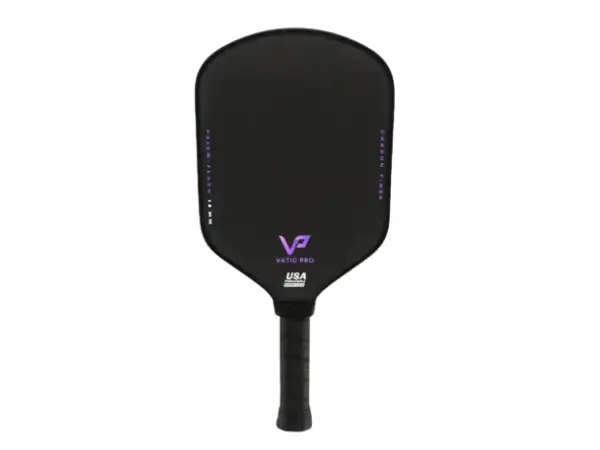
The spin is real, the control is solid, and it places shots far better than you’d expect. A genuinely smart starting point for developing players who want to learn on real gear.
Key Specs
- Core: 16mm optimized polymer
- Face: Raw T700 carbon fiber
- Weight: 8.0-8.2 oz
- Shape: Hybrid
- Handle: 5.3″
| ✅ Pros | ❌ Cons |
|---|---|
| Impressive spin and feel | Can’t match elite paddles |
| Solid control at the net | Durability is just average |
Best For
Beginners and developing players who want to build real habits on solid gear. Also works well as a second paddle for casual or recreational play — anyone who wants a reliable, no-fuss carbon option.
Honorable Mentions
The Six Zero Double Black Diamond 16mm brings thermoformed construction with a surprisingly soft touch for a Gen 3 paddle. That raw carbon fiber face generates elite spin, and the 16mm core gives you excellent control. It’s perfect for players who want modern tech with a traditional feel.
The 11SIX24 Pegasus Jelly Bean offers incredible value for control-focused players. The widebody shape creates a huge sweet spot, and that 16mm core provides excellent touch at the net. It’s ideal for developing players who prioritize placement over power.
Paddle Specs
| Paddle | Category | Shape | Weight | Core | Face | Power | Control | Spin | Sweet Spot | Price |
|---|---|---|---|---|---|---|---|---|---|---|
| J2NF | Best Overall | Hybrid | 8.0-8.3 Oz | 16mm Foam | CFC Cf/Fg | High | High | High | Huge | $$ |
| Perseus | Runner Up | Elongated | 8.1 Oz | 16mm Prop | Textured Cf | High | Med-High | High | Medium | $$$ |
| Prism | Budget Pick | Hybrid | 8.0-8.2 Oz | 16mm Poly | Raw T700 Cf | Medium | High | High | Large | $ |
Buying Guide
Material Differences
Carbon fiber delivers superior strength-to-weight ratio compared to alternatives. The stiffer construction creates better energy transfer and more consistent performance than fiberglass. Carbon also absorbs vibration effectively, reducing arm stress. Fiberglass flexes more but wears faster. Graphite paddles weigh less but sacrifice durability.
Core Thickness
Core thickness determines sweet spot size and ball feel. Thicker 16mm cores create larger sweet spots with softer touch, ideal for control-focused players. Thinner 14mm cores flex less, generating more power through rebound effect. Intermediate players benefit most from 16mm cores—they balance forgiveness with adequate pop.
Surface Texture
Raw carbon fiber creates natural grit that grips balls for spin generation. Rougher surfaces produce more spin but wear faster. T700 carbon fiber balances spin potential with longevity. Some manufacturers apply texture treatments for enhanced grip.
Weight Distribution
Paddle weight affects maneuverability and power. Lighter paddles (7.5-7.9 oz) move quickly but generate less power. Heavier options (8.0-8.3 oz) provide more stability and drive power but require stronger swing mechanics.
Mistakes
Choosing expensive paddles beyond your skill level wastes money—match equipment to ability. Pro endorsements don’t mean the paddle suits recreational play styles. Ignoring grip size creates hand fatigue and control problems regardless of paddle quality.
Expecting carbon fiber to compensate for technique gaps leads to disappointment—advanced materials enhance existing skills rather than create them.
Final Verdict
The Honolulu J2NF is the top pick here. It’s the rare paddle that doesn’t ask you to choose between spin, control, and forgiveness — you get all three in one package that actually works across skill levels. If you’re serious about upgrading your game and only want to buy one paddle, this is it.
FAQs
How long does carbon fiber face texture last?
Raw carbon fiber grit typically lasts 6-12 months with regular play. Heavy spinners may see degradation sooner. Surface wear depends on ball quality, court surface, and how aggressively you brush shots.
Do carbon paddles need break-in time?
Most carbon fiber paddles perform optimally right away, unlike some composite materials. The foam or polymer core might soften slightly over 5-10 playing sessions, but you won’t notice dramatic changes like older paddle technologies required.
What’s T700 carbon fiber exactly?
T700 refers to the carbon fiber grade—specifically the tensile strength rating. It’s industry standard for premium paddles, offering excellent stiffness and durability. Higher numbers like T1000 exist but don’t necessarily improve pickleball performance meaningfully.
Why do some carbon paddles feel harsh?
Stiffness without proper dampening creates harsh feedback. Cheaper paddles skip vibration-dampening technology. Quality carbon paddles use foam cores or specialized polymers that absorb shock while maintaining the material’s performance benefits. Core construction matters enormously here.
Do pros actually use carbon fiber paddles?
Almost exclusively at the professional level now. Carbon fiber’s performance advantages—spin potential, durability, consistency—make it the clear choice for competitive play. Tour players demand equipment that performs identically match after match, which carbon delivers.
