
The Honolulu J2NF is the best pickleball paddle under $200 — an all-court option with elite spin, genuine forgiveness, and the versatility to suit players from 3.5 all the way up to 4.5+.
This guide is for competitive players who want clear, honest answers instead of recycled hype. Three paddles made it into this breakdown, each built around a distinctly different playing style.
Top 3 Paddles
| Paddle | Category | Best For | Strength | Price |
|---|---|---|---|---|
| J2NF | Best Overall | Intermediates | Balanced | $$ |
| Loco | Runner Up | Power Hitters | Power | $$ |
| Mach 2 | Budget Pick | Control Players | Control | $$ |
Best Overall
Quick Take
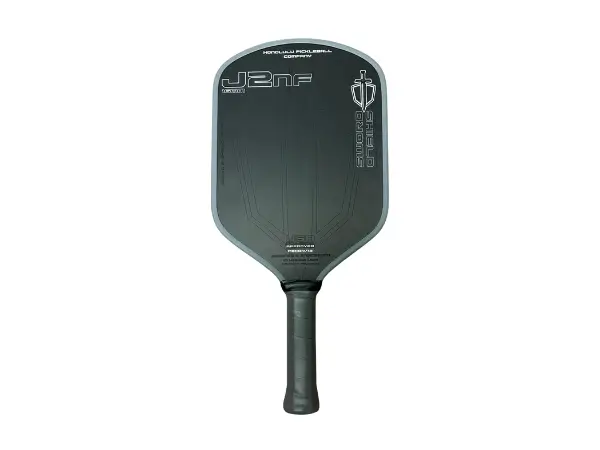
The J2NF does a little bit of everything well. It’s forgiving on mishits, precise in dink battles, and generates serious spin when you need it. You don’t have to choose between power and control here — it handles both.
Key Specs
- Core: 16mm multi-density EPP/EVA foam
- Face: Carbon fiber/fiberglass hybrid
- Weight: 8.0-8.3 oz
- Shape: Hybrid
- Handle: 5.5″
| ✅ Pros | ❌ Cons |
|---|---|
| Huge sweet spot | Needs break-in time |
| Generates serious spin | Heavier than most |
Best For
Players in the 3.5–4.5 range who want an all-court paddle they can grow with. If you’re working on placement and consistency rather than pure power, this one rewards the right habits.
Runner-Up
Quick Take
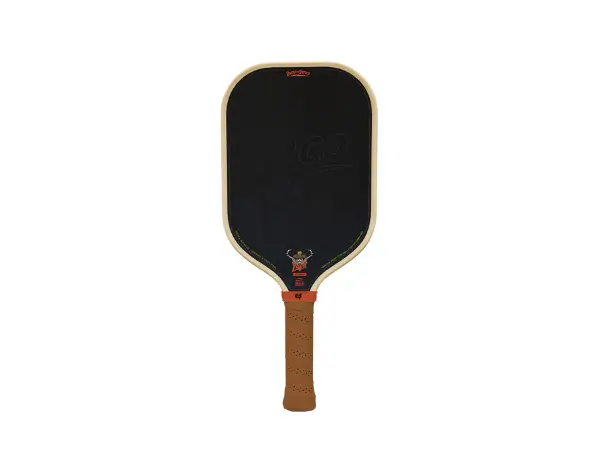
This paddle is built for players who want to end rallies, not extend them. It’s got a punchy, aggressive feel that rewards offensive play. If you love attacking and putting balls away, this one fits like a glove.
Key Specs
- Core: 16mm Gen 4 dual-foam floating core
- Face: Raw carbon fiber
- Weight: 7.9-8.1 oz
- Shape: Hybrid
- Handle: 5.5″
| ✅ Pros | ❌ Cons |
|---|---|
| Serious power output | Too aggressive for soft play |
| Three shape options | Needs break-in time |
Best For
Aggressive players who want to dictate rallies from the start. If your game is built around driving hard and finishing points at the net, the Loco gives you the firepower to back that up.
Budget Pick
Quick Take
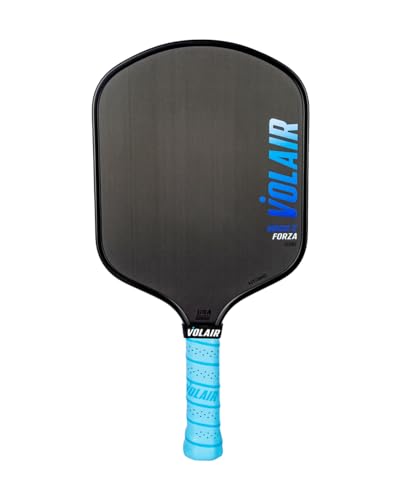
This is a legitimate control paddle that punches way above expectations. The sweet spot is genuinely impressive, and it moves fast enough to keep up in quick net exchanges.
Key Specs
- Core: 16mm polypropylene honeycomb with foam-injected walls
- Face: Toray T700 raw carbon fiber
- Weight: 8.0 oz
- Shape: Widebody
- Handle: 5.5″
| ✅ Pros | ❌ Cons |
|---|---|
| Fast swing at the net | Less power than rivals |
| Big forgiving sweet spot | Wide shape takes adjusting |
Best For
Control-first players who want a wide body with a big sweet spot and fast hands at the kitchen. Great for anyone who wins through precision and quick volleys rather than raw power.
Honorable Mentions
The Six Zero Double Black Diamond Control brings thermoformed construction with a specialized carbon face that controls pace beautifully. It’s built for advanced players who value precision over everything else, with an elongated shape that adds reach and leverage if you’ve got the mechanics to handle it.
Meanwhile, the Honolulu J2K uses a 100% Kevlar face for incredibly soft touch and maximum ball pocketing. Think of it as the J2NF’s more controlled, finesse-focused cousin—same great build quality with even softer feel for players obsessed with touch.
Paddle Specs
| Paddle | Category | Shape | Weight | Core | Face | Power | Control | Spin | Sweet Spot | Price |
|---|---|---|---|---|---|---|---|---|---|---|
| J2NF | Best Overall | Hybrid | 8.0-8.3 Oz | EPP/EVA Foam | CFC Layup | High | High | High | Huge | $$ |
| Loco | Runner Up | Hybrid | 7.9-8.1 Oz | EPP/EVA Foam | CFC Layup | High | Med-High | Med-High | Large | $$ |
| Mach 2 | Budget Pick | Widebody | 8.0 Oz | PP Honeycomb | T700 Raw CF | Med-High | High | High | Large | $$ |
Buying Guide
Core Construction
Foam cores are the big shift. They last longer, feel more consistent, and give you a bigger sweet spot with less vibration. Honeycomb still works if you want a lighter, crisper, cheaper paddle—but foam is where the market moved for a reason.
Face Material
Raw carbon fiber is the safe bet for most players because it gives you spin, control, and solid all-around performance. Fiberglass adds more pop, Kevlar feels softer, and rougher surfaces usually spin more—but they also wear faster.
Weight Distribution & Balance
Don’t obsess over static weight. What matters more is how heavy the paddle feels in motion and how stable it stays on mishits. For most people, the sweet spot is a paddle that feels quick in your hand but still has enough mass to hit through the ball.
Shape Selection
Standard shapes are more forgiving, elongated shapes give you more reach and power, and hybrid shapes sit in the middle. If you want the simplest rule: standard for forgiveness, elongated for aggression, hybrid for balance.
Mistakes
Don’t Copy the Pros
Don’t copy what the pros use just because it worked for them. Top players choose paddles for a very specific 5.0+ game, and what feels great for Ben Johns could feel awful for a 3.5 player still building consistency. Pick for your game, your level, and the way you actually play—not what looks good on YouTube.
Stop Obsessing Over Paddle Weight
And honestly, don’t get hung up on tiny weight differences. A few tenths of an ounce usually means very little in the real world. What matters far more is balance and weight distribution—how the paddle moves through the air, not just what the scale says.
Grip Size and Reviews
Grip size matters more than a lot of players think. The wrong size can lead to blisters, hand fatigue, and sloppy control. Most people do best around 4.125″ to 4.25″, and if you’re unsure, go smaller. You can always build it up with an overgrip, but you can’t really shave it back down. And one more thing: reviews help, sure, but they’re only a starting point. The right paddle is the one that feels right in your hand, for your style, on the court.
Final Verdict
The Honolulu J2NF takes our top recommendation because it genuinely nails everything—that massive sweet spot, the perfect balance of power and control, and durability that’ll keep you playing strong for months. For players who refuse to choose between power and finesse, this paddle delivers both without compromise.
The Bread & Butter Loco dominates if you want maximum offensive firepower. That Gen 4 dual-foam core delivers elite power while maintaining enough touch to hit drops and dinks when the point demands it. Three shape options mean you can dial in exactly what your aggressive game needs.
The Volair Mach 2 Forza proves you don’t need pure foam cores to get elite performance. That widebody design with foam-injected edges creates a sweet spot that makes everyone look better, and the low swing weight keeps you lightning-fast at the kitchen line.
FAQs
How long does a pickleball paddle usually last?
Most foam core paddles hold up for 1–2 years of regular play. Signs it’s time to replace: dead spots, cracking, or a noticeable drop in spin and pop off the face.
Do you need different paddles for indoors and outdoors?
Not really. The same paddle works in both settings. Outdoor play wears the face faster due to UV exposure and humidity, so plan for a replacement sooner if you mostly play outside.
What’s the fastest way to break in a paddle?
Play consistently for 5–10 hours in real game conditions. Drilling speeds things up too. Avoid hitting against a wall — it wears the face unevenly and can degrade performance instead of improving it.
How should I store my paddle to protect it?
Keep it in a padded bag, away from extreme heat and cold. Wipe the face down after every session — sweat and dirt grind down the surface texture and quietly reduce spin over time.
Does weather affect how a paddle performs?
Yes, noticeably. Cold air stiffens the core and kills pop, making the paddle feel flat in winter. High humidity affects grip and spin too. Let your paddle warm up before any competitive play.
How do I know when my paddle has gone dead?
Tap the face — a healthy paddle sounds solid. Dead spots sound hollow or dull. You’ll also feel a mushier response on contact and notice less spin bite before you even hear the difference.