

The best pickleball paddles for youth players are lightweight adult paddles — not kid-specific gear — with forgiving sweet spots and properly sized grips that support skill development without causing fatigue or injury.
This guide is built for parents and coaches picking a first or second paddle for junior players, backed by detailed specs and real-world performance factors that actually matter at this stage of the game.
Top 3 Paddles
| Paddle | Category | Best For | Strength | Price |
|---|---|---|---|---|
| Vatic Pro Prism | Best Overall | Intermediates | Balanced | $ |
| SLK Halo Control | Runner Up | Net Players | Soft Feel | $ |
| JOOLA Essentials | Budget Pick | Beginners | Sweet Spot | $ |
Best Overall
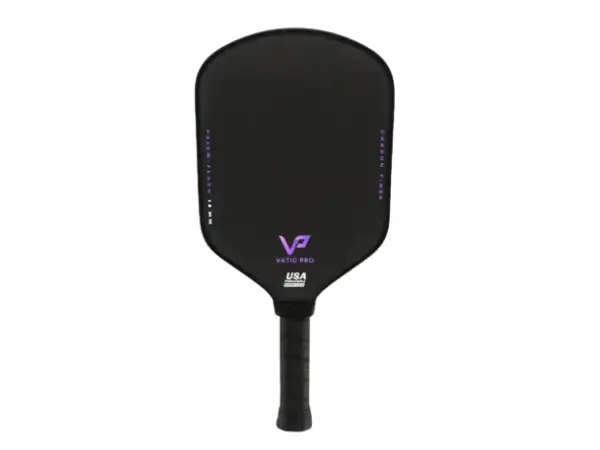
Quick Take
Drops and resets land where you want them, and off-center hits don’t punish you. It’s not the most powerful paddle out there, but if precise placement is your game, it clicks fast.
Key Specs
- Core: 16mm C7 polymer honeycomb
- Face: Raw TORAY T700 carbon fiber
- Weight: 7.9-8.2 oz
- Shape: Hybrid
- Handle: 5.3″ standard handle
- Grip Circumference: 4.125″
| ✅ Pros | ❌ Cons |
|---|---|
| Excellent placement control | Limited power output |
| Forgiving on off-center hits | Runs heavy for small kids |
Best For
Young players still figuring out shot placement and control. It’s forgiving enough to build good habits without fighting the paddle. If they’re past total beginner stage and starting to think about where the ball lands — this is it.
Runner-Up
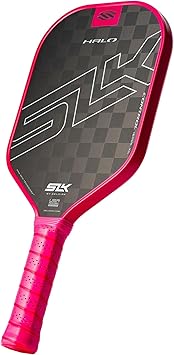
Quick Take
Soft, cushiony feel that makes kitchen play almost effortless. Built for dinks, drops, and resets. If placing the ball exactly where you want it matters more than raw power, this one fits your game.
Key Specs
- Core: 16mm polymer honeycomb
- Face: T700 raw carbon fiber (18k UltraWeave)
- Weight: 7.7-8.0 oz
- Shape: Standard
- Handle: 5.25″ (Max) or 5.75″ (XL)
- Grip Circumference: 4.35″
| ✅ Pros | ❌ Cons |
|---|---|
| Buttery soft feel at the net | Not built for power play |
| Great for dinks and drops | Grip runs wide for young hands |
Best For
Young players still building their game. The soft, forgiving feel keeps shots in play without needing a ton of strength behind them — so kids can focus on placement and net play instead of wrestling with a stiff paddle.
Budget Pick

Quick Take
Not your forever paddle — and it doesn’t pretend to be. But for occasional games, learning the ropes, or just getting out there without overthinking gear, it does everything you’d actually need it to.
Key Specs
- Core: 12mm response polymer honeycomb
- Face: Textured fiberglass
- Weight: 7.6-8.2 oz
- Shape: Standard
- Handle: 4.75″
- Grip Circumference: 4″
| ✅ Pros | ❌ Cons |
|---|---|
| Perfect for total beginners | Less spin than carbon fiber |
| Smallest grip of the three | Not built for long-term use |
Best For
Young First-timers who just want to grab a paddle and go. If you’re still learning what your game even looks like, this one keeps up without getting in the way.
Paddle Specs
| Paddle | Category | Shape | Weight | Core | Face | Power | Control | Spin | Sweet Spot | Price |
|---|---|---|---|---|---|---|---|---|---|---|
| Vatic Pro Prism | Best Overall | Hybrid | 7.9-8.2 Oz | 16Mm C7 Poly | T700 Carbon | Med-Low | High | High | Large | $ |
| SLK Halo Control | Runner Up | Standard | 7.7-8.0 Oz | 16Mm Rev-Core | 18K Raw Carb | Med-Low | High | High | Huge | $ |
| JOOLA Essentials | Budget Pick | Standard | 7.6-8.2 Oz | 12Mm Resp Poly | Fiberglass | Medium | Med-High | Med-Low | Large | $ |
Buying Guide
Weight Range
Youth players perform best with paddles between 7.0-7.8 ounces. Lighter options (7.0-7.5 oz) prevent fatigue but may lack power generation. Slightly heavier models (7.6-8.0 oz) teach proper mechanics without exhausting smaller arms.
The ideal weight sits around 7.5-7.8 ounces. This range develops good form while maintaining quick maneuverability at the net.
Grip Size
Most youth players need 4-inch circumferences or smaller. Test by having your child hold the paddle naturally. Fingers shouldn’t overlap or leave more than a finger’s width between fingertips and palm.
Proper sizing prevents tennis elbow and wrist strain. When uncertain, choose smaller—grip tape adds thickness easily.
Sweet Spot
Bigger sweet spots create more successful shots and build confidence faster. Youth players lack perfect consistency, so forgiving paddles make practice enjoyable.
Standard-shaped paddles offer the largest, most centered sweet spots. Elongated paddles provide reach but shrink the sweet spot—avoid these until players hit consistently clean.
Surface Material
Carbon fiber surfaces generate spin and provide honest feedback. Players feel clean hits immediately and recognize off-center contact. This accelerates learning.
Fiberglass surfaces offer forgiveness and softer feel. They help absolute beginners get the ball over the net.
For serious improvement, carbon fiber teaches better habits despite requiring slightly more initial skill.
Mistakes
Kid-Specific Paddles
Those tiny paddles marketed for children typically have smaller sweet spots and different weight distribution. Youth players aged 12 and up perform better with lightweight adult paddles they won’t outgrow quickly.
Graphics Over Performance
Cool designs attract attention, but mismatched specs lead to unused paddles. Performance should drive decisions. Add custom grip tape or stickers for personalization.
Bargain Shopping
Wooden paddles or sets under $15 hurt skill development. Inconsistent performance teaches bad habits and creates frustration. Invest at least $40-50 for legitimate paddles with predictable performance.
Weight Distribution
Total weight matters, but placement matters more. Head-heavy paddles generate power but tire young arms. Evenly balanced paddles provide the best learning platform.
Final Verdict
The Vatic Pro Prism Flash is the top pick for young players. It hits the right balance between forgiveness and real performance — something most youth paddles get wrong in one direction or the other. The SLK Halo is the softest option if feel matters most, and the JOOLA Essentials gets beginners on the court without the commitment. Start with the Vatic and grow into your game.
FAQs
Can younger kids under 12 use these paddles?
Absolutely—kids around 10-11 with decent coordination do fine with lightweight adult paddles. Just prioritize the lighter end (7.0-7.3 oz) and verify they can grip comfortably without strain during extended play.
Can youth players use their parents’ paddles?
Only if they’re lightweight (under 8 oz) and the grip fits properly. Most adult paddles run 8.0-8.5 oz, which causes fatigue and poor form. Better to find appropriately weighted options.
Are carbon fiber paddles too advanced for teens?
Not at all—carbon fiber provides honest feedback that accelerates learning. The texture helps generate spin even with developing technique. Just pair it with appropriate weight for their strength level and experience.
What accessories should I buy with the paddle?
Grab a paddle cover for protection, quality pickleballs (outdoor or indoor specific), and perhaps overgrip tape. A small equipment bag keeps everything organized. Skip gimmicky “must-have” accessories that add no value.
What’s the difference between indoor/outdoor play?
The paddle stays the same—ball choice changes. Outdoor pickleballs are harder with smaller holes; indoor balls are softer and larger-holed. Same paddle works for both environments without any performance penalty whatsoever.
Can youth paddles be used in tournaments?
Yes—all three recommended paddles meet USA Pickleball regulations. Check specific tournament rules for junior divisions, but standard adult paddles are legal and often preferred over kid-specific options in competitive play.