

The ASICS Gel-RENMA is the best pickleball shoe for most players — lightweight, breathable, and reliable on any court surface. The right footwear isn’t just a comfort upgrade; it’s what keeps your ankles safe through those quick side-to-side cuts the sport demands.
Whether you’re just getting started or already playing multiple days a week, this guide has a recommendation for you.
Best Overall Shoe

Quick Take
This is the one shoe players keep recommending to their friends — and it’s not hard to see why. Lightweight, breathable, works indoors and out. Just size down half a size and you’re golden.
| ✅ Pros | ❌ Cons |
|---|---|
| Lightweight and cushioned | Runs large, size down |
| Works indoors and outdoors | Not ideal for wide feet |
Best For
Players at any skill level who want a reliable everyday shoe that won’t fight them on the court. Especially solid for those who play multiple times a week.
Runner-Up

Quick Take
Not flashy, but seriously dependable. It’s the shoe that quietly keeps working for you match after match. Good stability, decent cushioning, handles both court types without any fuss.
| ✅ Pros | ❌ Cons |
|---|---|
| Solid lateral stability | Not the softest cushion |
| Works on any court type | Heavier than speed shoes |
Best For
Regular club players who want a no-drama shoe that just performs. If you’re playing a few times a week and want something that holds up, this fits the bill.
Budget Pick

Quick Take
Honestly, this shoe punches above its weight. It won’t wow you, but it won’t let you down either. Comfortable right out of the box, grips the court, does the job.
| ✅ Pros | ❌ Cons |
|---|---|
| Comfortable from day one | Fewer features than rivals |
| Solid grip on most courts | Less durable over time |
Best For
New players, casual players, or anyone who just wants a solid court shoe without overthinking it. Perfect if you’re playing 2–3 times a week.
Best Shoe for Comfort

Quick Take
Tyson McGuffin wears these, and once you put them on, you’ll understand why. The comfort level is genuinely hard to beat for long sessions. Wide-foot friendly too.
| ✅ Pros | ❌ Cons |
|---|---|
| All-day comfort and support | Heavier than speed shoes |
| Roomy fit for wider feet | Bulkier look and feel |
Best For
Tournament players, all-day clinic warriors, or anyone with wider feet who’s tired of shoes that pinch. If you spend six-plus hours on court, these are your people.
Also Great Shoe for Comfort
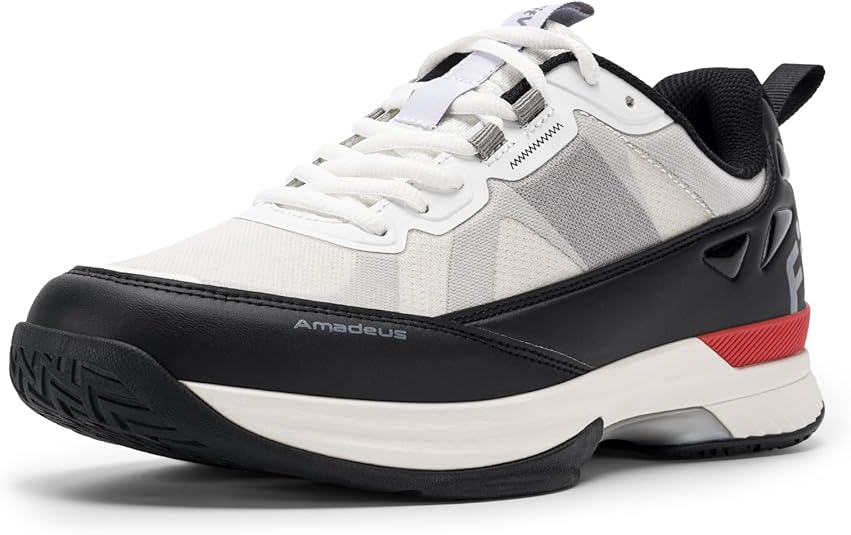
Quick Take
If standard shoes have ever caused you pain, this one was built with you in mind. Roomy where it needs to be, supportive where it counts, and kind to feet that other shoes just ignore.
| ✅ Pros | ❌ Cons |
|---|---|
| Extra wide, bunion-friendly fit | Less performance-focused feel |
| Great arch and joint support | Not ideal for narrow feet |
Best For
Players dealing with bunions, plantar fasciitis, or wider feet who’ve struggled to find a court shoe that actually fits. You shouldn’t have to choose between foot health and playing the sport you love.
Best Shoe for Wide Feet

Quick Take
If you’ve ever given up on finding a shoe that actually fits your feet properly, this one might change that. Multiple width options and a toe box that doesn’t lie.
| ✅ Pros | ❌ Cons |
|---|---|
| Available in multiple widths | Longer break-in period |
| Bouncy, energy-returning sole | Overkill for casual play |
Best For
Wide-foot players who’ve been squeezing into “standard” shoes. Also great for players who want a bit of extra energy from each step — that bounce is real.
Best Indoor Shoe

Quick Take
Technically a volleyball shoe, but that’s kind of the point — it’s built for the exact same gym floors. Lightweight, non-marking, grips smooth surfaces really well.
| ✅ Pros | ❌ Cons |
|---|---|
| Safe for non-marking courts | Not pickleball-specific |
| Super light and agile | Poor fit for outdoor courts |
Best For
Indoor court regulars who mainly play on gym floors. If your facility is strict about non-marking soles, this solves that problem while keeping you fast and nimble.
Best Shoe for Ankle Support
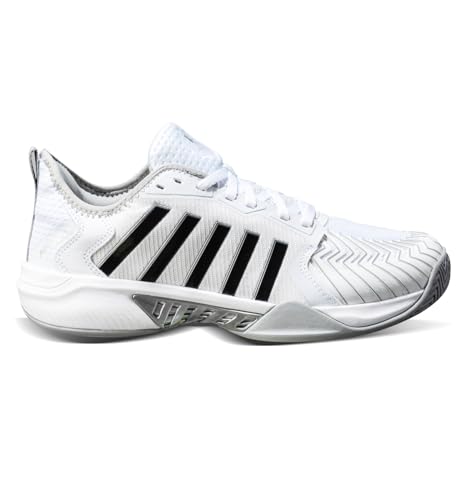
Quick Take
This is the ankle support shoe. Higher cut, extra padding at the collar, built to keep your foot locked in. Not for everyone, but if ankle stability is your priority, here you go.
| ✅ Pros | ❌ Cons |
|---|---|
| Great ankle protection | Too bulky for fast movers |
| Locks the foot in place | Niche use case for most |
Best For
Players recovering from ankle injuries or those who’ve rolled their ankles enough times to want real protection. Worth it if that’s your story.
Best Lightweight Shoe

Quick Take
If you love to move fast and hate feeling weighed down, this shoe gets it. It’s genuinely light. You feel it in the first step — quick, responsive, agile.
| ✅ Pros | ❌ Cons |
|---|---|
| Featherlight on your feet | Less cushion for big hitters |
| Excellent breathability | Wears faster than rivals |
Best For
Aggressive players who want to move like they’re on autopilot. Especially good for those who feel like traditional court shoes slow them down.
Best Tournament Shoe

Quick Take
Designed with input from pro players, and you can feel it in the fit. It locks down your foot, handles hard stops, and doesn’t flinch during tournament-level play.
| ✅ Pros | ❌ Cons |
|---|---|
| Precision fit, locked-in feel | Stiffer break-in period |
| Handles intense play well | Not ideal for casual play |
Best For
Competitive players and tournament regulars who need a shoe they can trust when the score is tight. If you take your game seriously, these match that energy.
Best Shoe for Advanced Players

Quick Take
The top-of-the-line option — built specifically for pickleball, reinforced where it matters, and cushioned at a level most court shoes don’t reach. This is the shoe for serious players.
| ✅ Pros | ❌ Cons |
|---|---|
| Adaptive, flexible upper | Overkill for casual play |
| Top-tier cushioning system | Long adjustment period |
Best For
Advanced and competitive players who want a shoe built from the ground up for pickleball — no compromises, no adapting a shoe from another sport.
Buying Guide
Court Surface
Indoor courts require non-marking gum rubber outsoles with softer compounds for smooth surfaces. Outdoor courts need harder rubber and deeper treads to resist abrasion from textured materials. Multi-surface players should prioritize outdoor specifications since outdoor shoes function adequately indoors while indoor-only models deteriorate rapidly on outdoor courts.
Fit Guidelines
Allow half-inch space between longest toe and shoe front. Ensure snug midfoot fit while maintaining roomy toe box. Width varies significantly between brands—New Balance and FitVille accommodate wider feet while Skechers runs wider than industry standard.
Test shoes late in day when feet reach maximum size. Feet swell during extended play sessions.
Support Features
Lateral stability prevents ankle rolling during quick directional changes. Reinforced sidewalls and TPU overlays provide structure without adding weight.
Responsive cushioning protects joints while maintaining court feel. Heavier players need more shock absorption than lighter athletes. Players with ankle instability history benefit from mid-cut collars providing additional support.
Durability Indicators
Toe reinforcement extends lifespan in high-wear areas. Draggers benefit from rubberized toe caps. Premium rubber compounds maintain traction patterns longer than budget options.
Budget Range
Entry-level shoes ($50-70) suit recreational players using courts 2-3 times weekly. Mid-range options ($70-100) balance performance and value for most athletes. Premium models ($100-150) offer specialized features and extended durability for competitive play.
Calculate cost per wear rather than initial price. Quality shoes lasting twice as long provide better value despite higher upfront investment.
Mistakes
Avoid running shoes lacking lateral support—they increase ankle injury risk during side-to-side movements. Tennis shoes function adequately but miss pickleball-specific optimizations.
Never ignore facility marking requirements. Many courts prohibit black-soled or marking shoes regardless of performance quality.
Don’t prioritize price over proper fit. Ill-fitting shoes cause blisters and injuries regardless of cost. Conversely, expensive shoes don’t guarantee proper fit.
Replace shoes every 45-60 playing hours. Worn treads and compressed cushioning compromise safety before visible damage appears. Don’t wait until complete failure.
Final Verdict
The ASICS Gel-RENMA wins because the pickleball community has spoken — it’s the shoe players actually keep recommending to each other, regardless of skill level.
Wide-foot players should look at the New Balance FuelCell 996 V6, and newer players can start with the Gel-Dedicate 8 without sacrificing quality.
Bottom line: any of these beats playing in running shoes, so pick the one that fits and get on the court.
FAQs
Is it okay to wear regular sneakers for pickleball?
Regular sneakers lack the lateral support and stability features essential for pickleball’s side-to-side movements. While acceptable for casual recreational play, they significantly increase ankle injury risk during competitive games and don’t provide court-appropriate traction.
Can I wear my tennis shoes to play pickleball?
Tennis shoes are a reasonable alternative since they offer lateral support and non-marking outsoles. However, they’re typically heavier and designed for larger courts with more forward movement, making them less agile than pickleball-specific shoes.
Are running shoes suitable for playing?
Running shoes are poor choices for pickleball because they’re engineered for forward motion only. They lack lateral stability for side movements, offer wrong cushioning placement, and their treads don’t grip court surfaces properly, creating injury risk.
What are the main differences between tennis and pickleball shoes?
Pickleball shoes are lighter and more agile for quick movements on smaller courts, emphasizing lateral stability over durability. Tennis shoes are heavier with reinforced construction for larger court coverage and forward motion, prioritizing long-term durability over quick direction changes.
How long do pickleball shoes typically last?
Pickleball shoes last 3-6 months with frequent play (3+ times weekly) or 45-60 hours of court time. Lifespan depends on playing frequency, court surface, body weight, and footwork style. Replace when outsoles smooth out or midsole cushioning compresses noticeably.